The Hydrogen Insurgency: How a 19-Year-Old Dropout Built a $1.8B Defense Giant
The Pentagon has spent the last forty years optimizing for the wrong kind of war.
For decades, the United States built its military superiority on a small number of exquisite, hyper-expensive, hand-crafted platforms like the $135 million F-35 fighter jet. But the reality of modern peer-to-peer conflict has completely shattered this playbook.
Modern conflict is a war of attrition. It is a mathematical struggle defined by mass, velocity, and supply chain logistics. The skies are no longer dominated solely by multi-million dollar manned jets: they are swarmed by cheap, software-defined, autonomous drones that require continuous, rapid replenishment.
And right now, America’s industrial base is losing the math equation.
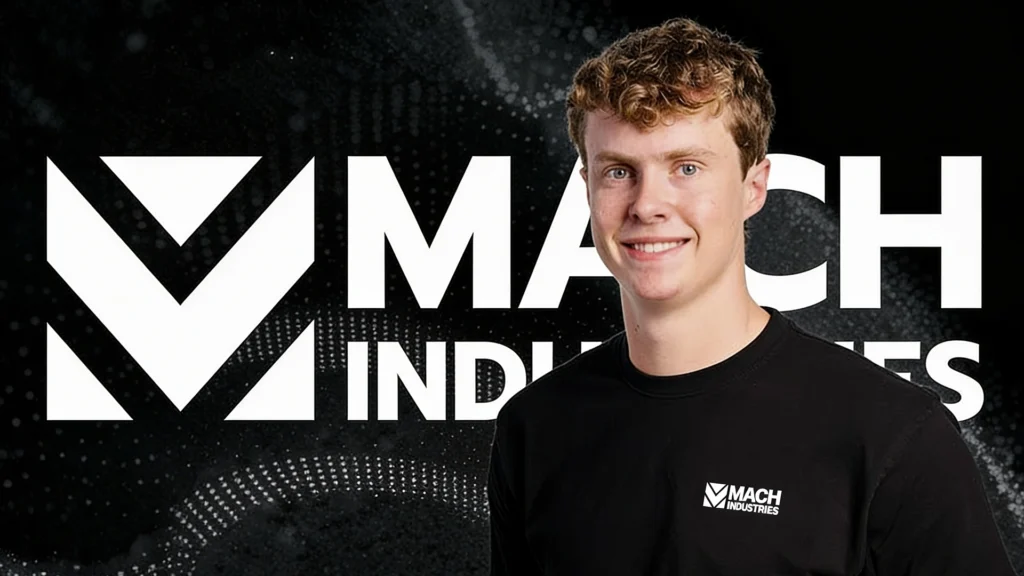
Enter Ethan Thornton, the founder of Mach Industries.
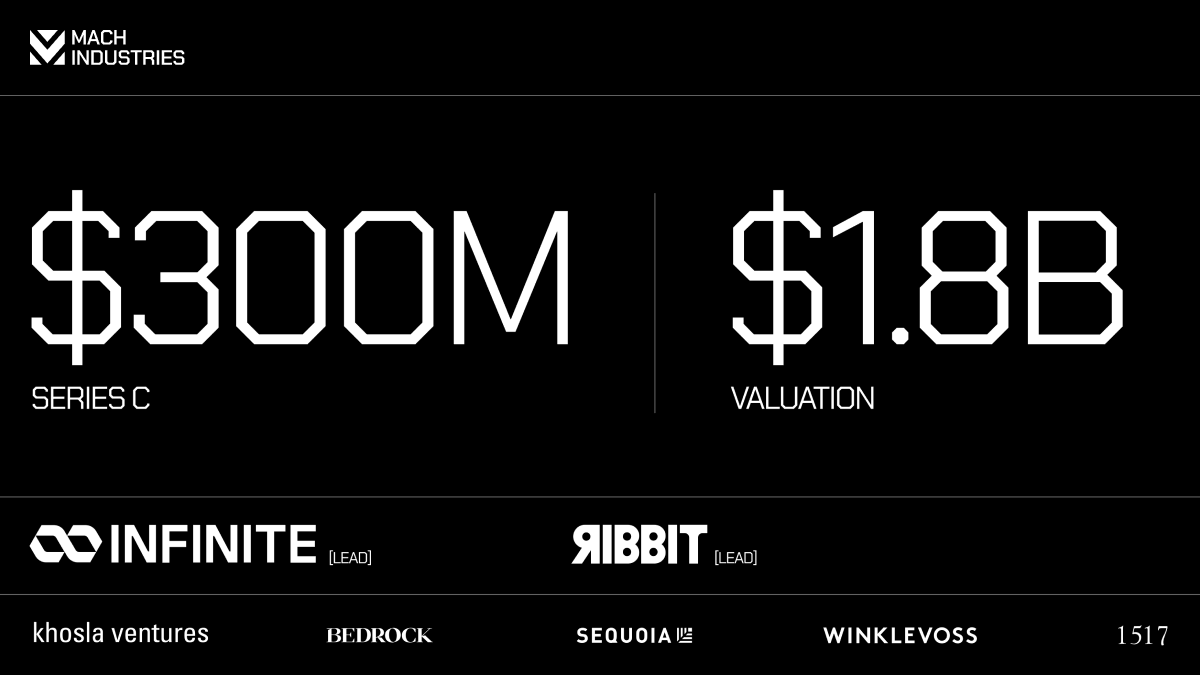
In June 2026, the Huntington Beach, California-based startup closed a massive $300 million funding round, pushing its valuation to an astonishing $1.8 billion. Backed by Sequoia Capital and Founders Fund, Ethan dropped out of MIT at age 19 to challenge the defense establishment. He proved that the ultimate weapon on the modern battlefield is not heavier armor or more complex microchips: it is a cheap, abundant molecule manufactured directly in the mud.
The Problem: The Exquisite Battery Bottleneck
When the defense sector finally realized it needed to transition to autonomous, unmanned systems, it ran straight into a physical bottleneck: power and logistics.
The Weight of Lithium
Most commercial-style drones run on lithium-ion batteries. Batteries are heavy, highly vulnerable to temperature swings, and take hours to recharge. More importantly, they rely on complex supply chains dominated by foreign adversaries. You cannot defend a nation if your drones require battery chemistry from the very near-peer adversary you are trying to deter.
The Gunpowder Trap
Traditional munitions rely on gunpowder and solid rocket fuels. These chemicals are highly volatile, difficult to transport safely across oceans, and require massive, centralized chemical plants to manufacture. When a conflict breaks out, these centralized facilities become high-priority targets, creating a single point of failure for the entire supply chain.
Ethan Thornton, who grew up working on heavy machinery on a West Texas farm, realized this division was artificial. He understood that to build a survivable, high-volume military, you had to replace gunpowder and heavy batteries with a decentralized, field-manufactured fuel: hydrogen.
The Playbook: Harnessing the H_2 Advantage
Mach Industries’ core innovation is its ability to utilize hydrogen-oxygen (H2 and O2) combustion to power projectiles, unmanned aerial vehicles (UAVs), and defense hardware.
Generating Fuel in the Dirt
To solve the logistical nightmare of transporting highly pressurized hydrogen gas across battlefields, Mach developed Prometheus. This is a tactical, field-deployable generator that utilizes a simple chemical reaction to crack water using activated aluminum powder.
2Al + 6H_2O \rightarrow 2Al(OH)_3 + 3H_2
By utilizing this reaction, soldiers do not need to transport heavy fuel tanks. They can produce clean, highly energetic hydrogen on demand, anywhere in the world, using localized water sources and stable aluminum powder.
This mirrors the decentralized operational philosophy of Apollo Atomics building compact steam generators to deploy nuclear reactors on flatbed trucks. Both companies are taking proven physical processes and shrinking the physical footprint to bypass centralized logistics.
The $1/300th$ Fighter Jet
With unlimited hydrogen fuel produced directly in the field, Mach engineered a suite of expendable, mass-producible defense platforms:
- Viper: A vertical takeoff, turbojet-powered strike UAS. Ethan describes it as a miniature fighter jet that two people can launch from a simple tube. It transitions to wing-borne flight, carries a ten-kilogram warhead, and costs a fraction of a traditional missile.
- Glide: A high-altitude, unpowered glide bomb launched from balloons. It coasts silently across hundreds of miles to penetrate heavily defended airspace with a minimal radar signature.
- Dart: An end-to-end kinetic interceptor counter-drone system launched in 2026 to track and destroy incoming enemy swarm attacks.
By prioritizing expendable, low-cost hardware, Mach can flood the airspace with thousands of units, overwhelming enemy defenses. It is the exact opposite of the legacy prime model, mirroring the aggressive hardware-software integration we saw with Quantum Systems deploying vertical takeoff drones on the front lines of Europe.
The Forge: Decentralized Manufacturing
Following Elon Musk’s 5-step engineering algorithm, Ethan did not build a singular, massive factory that could easily be targeted by an adversary.
Instead, Mach is deploying The Forge, a globally distributed manufacturing network. By standardizing the production of their micro-jet propulsion engines and carbon-fiber airframes, Mach can license and replicate these small factories inside partner nations.
If one factory is compromised, dozens of others continue to operate. This distributed resilience is the same strategy Hadrian uses to rebuild the fragmented aerospace supply chain with software-defined factories.
Founder Lessons: The Solo-Founder Insurgency
For builders trying to break into highly regulated, capital-intensive markets, Ethan Thornton’s trajectory offers critical operational rules:
1. Reject the Exquisite
Traditional defense contractors build expensive, high-margin, hand-crafted machines because their business model relies on multi-decade maintenance contracts. As a startup, you cannot beat them at their own game. You must build for attrition. Focus on mass-producible, low-cost, expendable systems that can be manufactured at a high volume, much like Epirus developed high-power microwave systems to defeat drone swarms on a massive scale.
2. Own the Underlying Energy
If your hardware relies on an external supply chain for its fuel, battery cells, or power, you do not own your destiny. By building the Prometheus field-generation platform, Mach decoupled its drones from the global grid.
Like Crusoe Energy routing computing power directly to wasted flare gas sources, the highest-leverage move a hard tech company can make is capturing and controlling its own energy input.
3. Maintain Decisive Control
When Ethan Thornton founded Mach Industries, he retained over 80% of the equity. This solo-founder capitalization allowed him to make lightning-fast technical pivots, skip endless board debates, and focus 100% of his energy on rapid prototyping.
Speed is the ultimate weapon of a startup. If you dilute your control too early, the bureaucracy will dilute your product, resembling how the founders of Sola AI bypassed corporate committees to ship custom workflows directly from their basement.
Final Word
Deterrence is a function of industrial mass.
Mach Industries is proving that the defense of our physical world will not be won by complex, multi-year government procurement programs. It will be won by young, aggressive founders who are willing to drop out of prestigious universities, get their hands dirty on the factory floor, and build the physical machines of tomorrow.

Tumisang Bogwasi
Tumisang Bogwasi is an award-winning entrepreneur and strategist sharing insights on business growth, leadership, and innovation.