The Robot That Eats Rock: How Petra Beat Hard Rock and Still Went Under
We can split the atom. We can put a data centre in orbit. But on the ground, we still move electricity the way we moved it in 1920: wooden poles and copper wire, strung through forests.
It is a fragile arrangement, and an increasingly lethal one. A single spark from a downed line can incinerate a town. California and Hawaii have both learned this at a cost measured in lives and in billions, which is why the fragility of the grid keeps showing up in these pages.
The fix is not a mystery. Put the lines underground. Utilities know this, regulators know this, and the residents of every fire-prone canyon in the American West know this.
The obstacle is not politics. It is geology.
Granite, basalt and quartzite destroy conventional drill bits. In the Sierras, the Rockies and along much of the Pacific coast, the ground is hard enough that undergrounding projects stop being economic. Utilities quote figures in the millions per mile for hard-rock stretches, which is a polite way of saying the work does not get done.
There is a second cost, quieter and larger. Because nobody can survey ground perfectly, contractors price the uncertainty into every bid. Boreholes get sampled every few hundred feet, and the geology between samples is a guess. Guess wrong and the machine you chose is the wrong machine, and a wrong machine in hard ground is a machine stuck underground. So the industry adds a contingency fee, a markup of up to thirty percent, purely to cover the what-if.
Thirty percent of a national undergrounding programme is not a rounding error. It is the reason the programme does not happen.
30%
Contingency fee added for geology nobody can predict
Not the price of the work. The price of the uncertainty. Remove the uncertainty and the markup has nothing left to cover.
So the grid stays overhead, and the fires keep starting.
A drill that never touches the rock
In December 2021, a San Francisco startup called Petra came out of stealth with a $30 million Series A led by DCVC, bringing total funding to $33 million. ACME Capital, Congruent Ventures, 8VC, Real Ventures, Elementum Ventures and MaC Venture Capital joined the round.
Petra was founded by Kim Abrams, who ran it as CEO. Her CTO was Ian Wright, a co-founder of Tesla. That pairing tells you how the company saw itself: not a construction firm that bought robots, but a hardware company that happened to point itself at dirt.
Their machine is called Swifty, and its central idea is a refusal. Swifty does not grind through rock. It does not touch the rock at all.
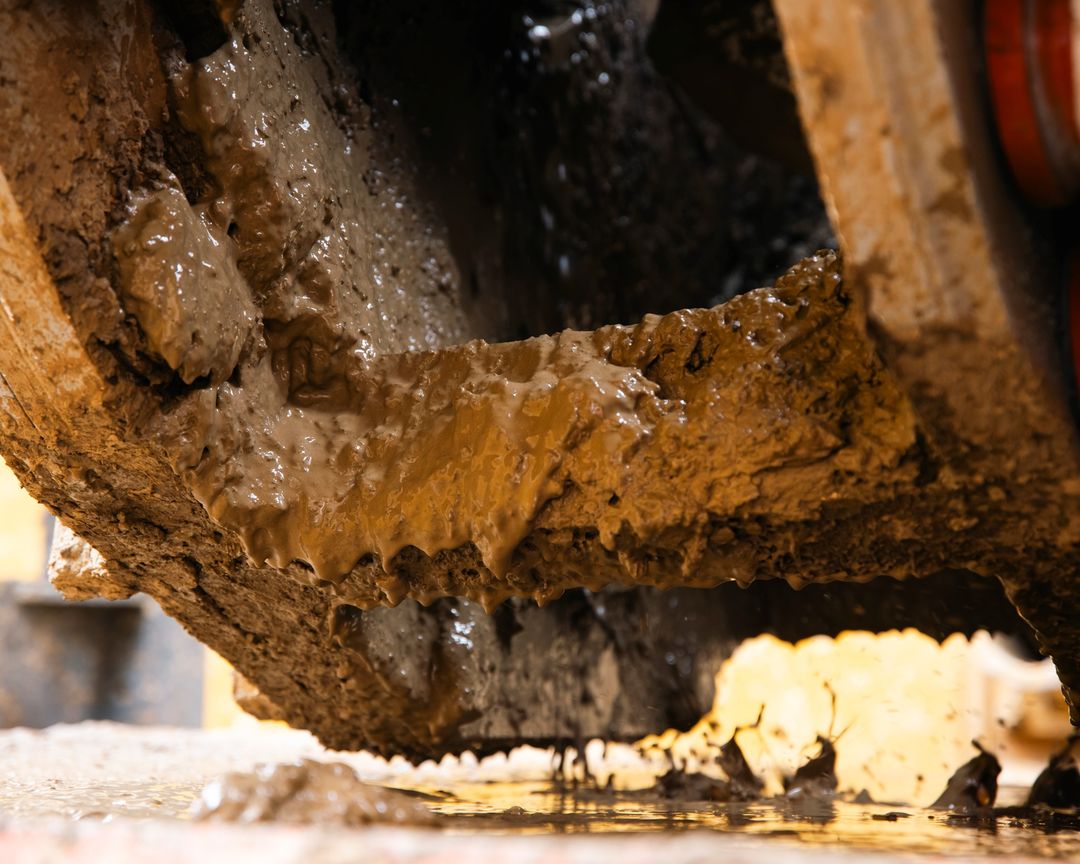
The mechanism is thermal spallation. Swifty directs a jet of gas heated beyond 1,800 degrees Fahrenheit at the rock face. The surface expands faster than the mass behind it can accommodate, and the rock cracks and pops off in flakes, glowing and charring as it goes. A high-pressure system then clears the debris from the bore.
Because nothing mechanical contacts the rock, there is no wear surface. No bit to dull, jam, snap or replace halfway down a bore, which in conventional hard-rock drilling is the event that turns a scheduled job into an open-ended one.
Swifty is semi-autonomous and steers using machine vision. It cuts tunnels from roughly 18 to 60 inches in diameter, where a conventional machine is typically built around a single diameter. One robot covers the range of utility conduit a city actually needs. It is the same physical-world pattern that let Radiant move a nuclear reactor into a shipping container and Hadrian turn aerospace machining into software-defined manufacturing.
Petra, by the numbers
| Founded by | Kim Abrams, CEO. Ian Wright, CTO, co-founder of Tesla |
|---|---|
| Funding | $33M total, $30M Series A led by DCVC, Dec 2021 |
| Method | Non-contact thermal spallation, machine vision steering |
| Face temperature | Above 1,800°F |
| Bore diameter | 18 to 60 inches |
| Proof run | 20 feet of Sioux Quartzite at one inch per minute |
The Proof
Petra took Swifty to a Minnesota quarry and bored a 24-inch tunnel through twenty feet of Sioux Quartzite at a rate of one inch per minute.
That sentence is easy to skim. Sioux Quartzite is among the densest rock on the continent, a metamorphic stone that conventional equipment treats as a reason to reroute the entire project. Abrams called it the hardest rock on earth. Petra did not reroute around it. It cut a tunnel through it.
We have invented a completely new way to excavate rock, and this will have profound implications on the future of tunneling.
Kim Abrams, CEO, Petra, December 2021
She was right about the technology. That turned out not to be the same thing as being right about the company.
It worked, and it closed
Petra wound down operations in 2024.
Not because the physics failed. The physics were demonstrated in the hardest rock anyone could put in front of the machine. The company folded despite the technical success, which is the version of failure founders find hardest to plan for and hardest to accept.
The uncomfortable lesson sits right here. A working machine is an input to a business, not a business. Petra had to sell into utilities, which buy on multi-year procurement cycles, under regulatory review, with a strong institutional preference for methods used a thousand times before. A first-of-its-kind thermal boring robot is precisely what procurement is built to filter out. Capital ran on a startup clock. Utility adoption ran on a utility clock. The two clocks never met.
Somewhere along the way Petra had also acquired Zilper Trenchless. That deal is where this story turns, so it is worth slowing down on.
The brothers who built the other machine
Zilper was founded in 2018 by two brothers, Daniel and Roberto Zillante, raised in Venezuela in a family of Italian immigrants who worked in construction. Roberto trained as a mechanical engineer, took a master of management engineering at the Politecnico di Torino, and went on to run the trenchless division of the largest water infrastructure contractor in Colombia. Daniel went to MIT.
In May 2018 the brothers took Zilper to the MIT $100K and won the Audience Choice Award, a ten thousand dollar cheque handed over on stage. It is a small prize by the standards of the numbers elsewhere in this piece. It was also the first time anyone with money agreed the idea was real.
What Roberto built at Zilper was Assisted Dynamic Boring, since formally recognised by the International Society for Trenchless Technology. He holds multiple patents in the field, sits on the board of the Latin American Society for Trenchless Technology, and has taught trenchless methods as a university professor. This matters for what comes next: he was not a technician who happened to be nearby when the company failed. He was one of the few people alive who could have restarted it.
When Petra acquired Zilper, Roberto became Petra’s CTO, leading the multi-platform system and the next generation of jet boring. When the wind-down came, he was the person who understood the machines best, watching an employer die around technology he had spent fifteen years building.
The engineer who bought back his own life’s work
Zillante spent his personal savings buying two machines out of the dying company.
Not a metaphor and not a symbolic gesture. He purchased the only two multi-platform ADB48 units operating in the United States, from his own failing employer, with his own money.
Then he did the one thing that turns an argument into a fact. He took the machines out and bored 500 feet of main gas pipeline for PG&E in California, through changing ground conditions, and finished the job.
That completed job is what brought investors back. On the strength of it, Zillante acquired most of Petra’s remaining intellectual property and hard assets and restarted the operation under a new name: Phoenix Boring. A Form D filing in March 2026 shows just over $5.2 million raised.
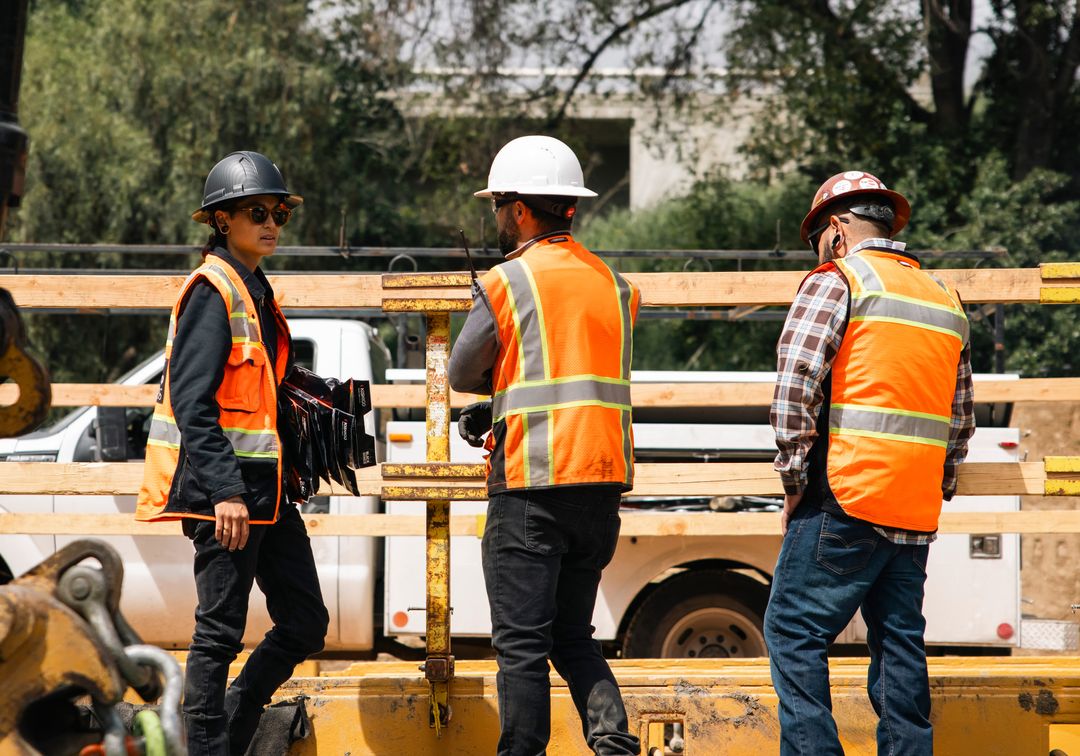
Phoenix now runs the machine as the Multi-Platform ADB48, and the pitch answers the contingency fee directly. Six boring modules, two of them proprietary, hybrid powered, inside a single rig: hard rock, cobblestone, boulders, water-logged soil, loose sand, dense clay. If one machine handles every geology, the contractor stops betting on the borehole report, because there is no wrong machine to choose. The company claims crossings up to nine times faster than conventional methods, and more than thirty completed.
The technology Petra proved and could not sell is in the ground, doing paid work.
Founder lessons from the underground
Attack the variable cost, not the fixed one
Every construction bid carries one silent question: what if we hit granite? Nobody can answer it, so the industry prices it as a contingency fee of up to thirty percent. That markup is not the cost of drilling, it is the cost of not knowing, and it is what makes the project unbuildable. The real product here was never cheaper drilling, it was the deletion of the question. Make hard rock behave like soft soil and a variable, high-risk construction project becomes a predictable, fixed-cost manufacturing process. If you are opening a market everyone wants and nobody serves, hunt for the unpredictable step, not the expensive one.
Working technology is not a business model
Petra proved its machine against the hardest rock available and still ran out of road. The gap was never engineering. It was the mismatch between venture timelines and utility procurement timelines. If your buyer is a regulated monopoly, the sales cycle is a physical constraint on your company, as real as the rock, and it belongs in the plan from day one rather than in the post-mortem.
Beating physics builds a moat that outlives the company
Software founders compete for attention, and when the company dies the asset evaporates. Hardware founders compete against physics, and the win persists. Petra’s proof did not stop being true when Petra stopped paying salaries, which is exactly why there was something left worth buying, and why a nine-person team could pick it up and keep going.
Conviction is a signal, and investors can read it
Zillante did not raise money to buy the machines. He bought the machines, finished a real job for a real utility, and raised money afterwards. The sequence matters. He converted the question investors could not answer, will this hold up in the field, into 500 feet of completed pipeline. Proof is cheaper to sell than promise.
Final word
We keep framing the energy transition as a question of generation. Solar, wind, nuclear, and the race to build power for the AI buildout. The harder problem is transmission, because a grid that is fire-proof, storm-proof and future-proof has to go underground, and underground means through rock.
Petra stopped fighting the earth and started melting through it. The company did not survive the discovery. The discovery survived the company.
Sources
- Petra emerges from stealth with $30M raised for tunnel-boring robot, Swifty, TechCrunch, December 2021
- A Tesla Cofounder’s New Focus: Rock-Tunneling Robots To Protect The Grid, Forbes, December 2021
- Watch as Petra’s thermal bore cuts through undrillable rock, New Atlas, January 2022
- Why We Started Phoenix Boring, Phoenix Boring
- Zilper Trenchless wins the MIT $100K Audience Choice Award, MIT $100K, May 2018

Tumisang Bogwasi
Tumisang Bogwasi is an award-winning entrepreneur and strategist sharing insights on business growth, leadership, and innovation.