How ICON is Printing the Future of Construction
The global construction industry is currently facing a catastrophic math problem.
Populations are growing, housing deficits are in the millions, and the skilled labor force required to build homes is rapidly aging out of the market. We do not have enough human hands to build the infrastructure the world needs.
For the last 100 years, building a house has meant organizing a chaotic, highly fragmented supply chain of framers, drywallers, roofers, and concrete layers. It is slow, dangerous, and incredibly expensive.
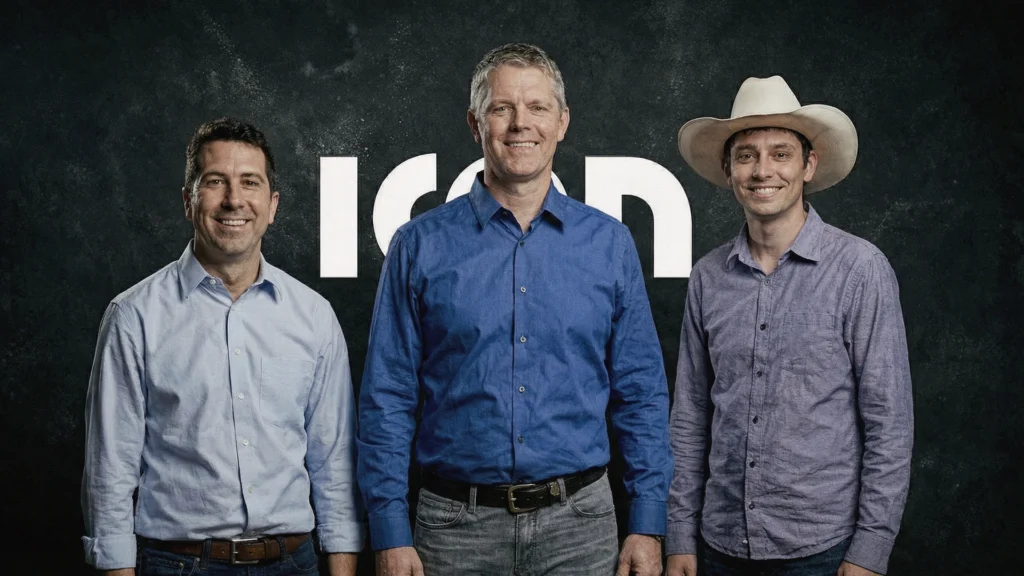
Enter Jason Ballard, Evan Loomis, and Alexander Le Roux, the founders of ICON.
The Texas-based hard tech company is not trying to build better hammers or optimize general contractor software. They are replacing the entire analog construction process with advanced robotics.
Their newest machine, the Titan Print System, is about to turn the physical world into a software deployment.
The Problem: The Analog Construction Site
If you look at a construction site today, it does not look drastically different from what it did in 1950.
Building relies on dozens of disparate trades coordinating perfectly in unpredictable weather. When human labor is the primary driver of physical construction, scale is inherently limited.
Just as Figure AI realized the global labor shortage requires humanoid robotics, ICON realized that the global housing shortage requires autonomous construction.
You cannot solve a 21st-century housing crisis with a 20th-century labor pool.
The Playbook: Software-Defined Architecture
ICON’s Titan (MK1 / T27) system is a massive, multi-story robotic 3D printer. It fundamentally rewrites the physics and economics of building a home.
1. Speed as a Feature
In traditional construction, site setup and material staging take weeks. The Titan arrives on a standard flatbed truck and goes from parked to printing in under one hour.
Once activated, the robotic arm extrudes specialized “formcrete” with absolute precision. It is capable of printing a complete 2,000-square-foot home in just seven days.
2. Deleting the Assembly Line
Following the core principle of Elon Musk’s 5-Step Algorithm, ICON aggressively deleted unnecessary steps. Instead of relying on a multi-step process for structural integrity, the Titan features continuous “printed-in reinforcement.”
The machine injects reinforcement directly into the bead of material during the printing process. By removing the separate framing and drywall phases, the robot becomes a single, continuous assembly line.
3. The $20 per Square Foot Moat
The ultimate metric for any hard tech startup is the cost curve. Because the Titan operates with almost zero human operators on the floor and requires minimal secondary materials, ICON can deliver wall systems for $20 per square foot. That is a fraction of the national average.
When a company can build structures faster and cheaper than the legacy industry, they do not just capture market share. They rewrite the entire economy.
Founder Lessons: The Hardware Insurgency
Turn Iron into Code
Just as Revel turned industrial hardware into software-defined endpoints, ICON is turning the job site into a programmable grid. When an architect finalizes a CAD file, they do not hand it to a foreman. They beam the file to the Titan.
The robot executes the exact digital instruction in physical space, eliminating human error and translation friction.
Delete the Human Requirement
The most lucrative startups of this decade are taking on the dull, dirty, and dangerous jobs. Blue Water Autonomy deleted the human requirement at sea to build a ghost fleet. Jason Ballard applies that exact mindset to planetary infrastructure.
When you automate the most dangerous aspects of heavy industry, you eliminate massive
Fix the Foundation First
Much like Hadrian is replacing analog machine shops to fix aerospace, ICON is fixing the foundation of real estate. They realize that software companies cannot live in a physical world that is too expensive to build. The highest leverage founders are building the literal walls of the future economy.
Final Word
The era of analog construction is coming to a close.
ICON is proving that the most important technological advancements are no longer happening on screens. They are happening in the dirt. By turning a flatbed truck into a fully autonomous, multi-story factory, Jason, Evan, and Alexander are ensuring that the cities of tomorrow will be deployed like software.

Tumisang Bogwasi
Tumisang Bogwasi is an award-winning entrepreneur and strategist sharing insights on business growth, leadership, and innovation.