The Heavy Metal Pivot: How Victor Boyd is Automating the Warehouse Backbone
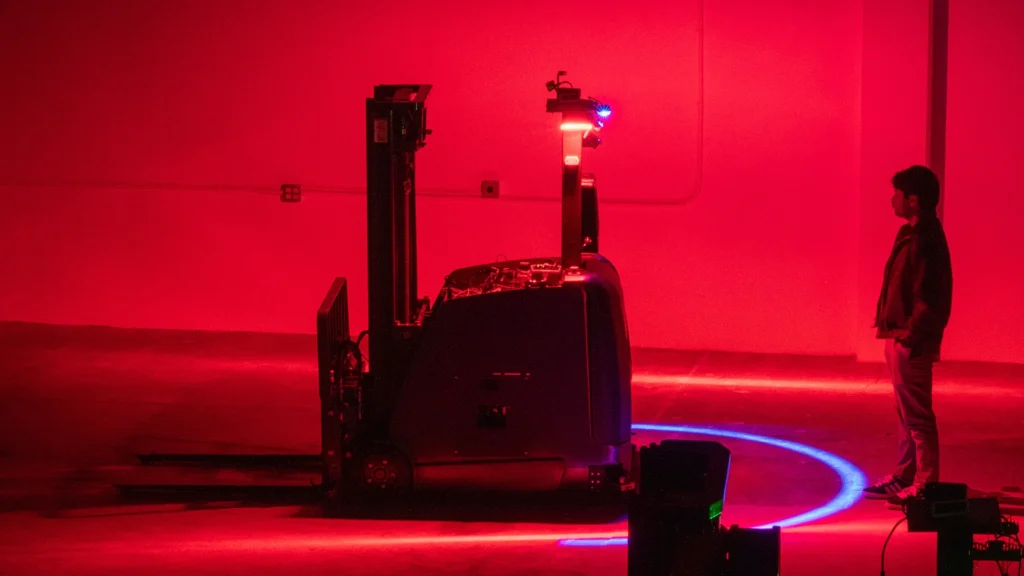
The global supply chain has a massive, nine-thousand-pound bottleneck.
We live in an era where software can route a package across oceans in seconds, yet the moment that package lands in a distribution center, it slams into an analog wall. Millions of tons of cargo sit idle on concrete floors because there are not enough human operators to move them.
The warehousing sector is currently facing a catastrophic labor shortage, paired with grueling safety conditions. In the United States alone, forklift accidents account for tens of thousands of serious injuries every year, turning the warehouse floor into one of the most high-liability zones in modern business.
To solve this, a dozen robotics startups rushed to build autonomous forklift kits. But they almost all made the exact same mistake: they tried to build software to retrofit existing, manual fleets.
Enter Victor Boyd, the founder of Cavalla.
Victor, a Thiel Fellow who moved to San Francisco in the middle of the night to pursue his vision of planet-scale logistics, realized that retrofitting was a technical and economic trap. Instead of trying to optimize a broken process, Victor and his Head of Engineering, Aayush Agrawal, decided to build their own custom, purpose-built autonomous forklifts from scratch.
By going full stack with their signature machine, the Cavalier, Cavalla is proving that to automate heavy industry, you cannot just write code: you have to control the heavy metal.
The Problem: The Retrofitting Trap
When Cavalla launched in 2023, the initial strategy looked incredibly pragmatic: buy existing manual forklifts, install a suite of cameras, LiDAR, and actuators, and sell the automation kit to warehouse managers. It was a low-capex approach that promised rapid scaling.
But as they deployed their first pilots, Victor and his team hit three insurmountable barriers that are highly common in the physical-world economy.
1. The Customization Nightmare
Every manual forklift model is fundamentally different. Even within the same brand, variations in hydraulic pressure, steering geometry, and electrical harnesses mean that a retrofitted automation kit requires custom engineering for every single deployment. You cannot build a low-cost, scalable business when every customer requires a unique hardware integration.
2. The Warranty and Rental Blockade
The vast majority of logistics providers and third-party logistics (3PL) companies do not actually own their forklifts: they rent them on multi-year leases. The leasing companies strongly resist permanent modifications, and warehouse owners live in constant fear of voiding manufacturer warranties. A retrofitting startup is forced to fight an uphill battle against risk-averse legal departments before they can turn a single bolt.
3. The Integration Speed Tax
Integrating an aftermarket kit onto a manual forklift is a slow, manual process. It requires days of onsite assembly, calibration, and debugging. Because warehouses run on razor-thin margins and tight schedules, taking a forklift out of commission for a week to install an unproven kit is an operational dealbreaker.
These constraints pushed Victor to make a defining pivot. Following the core principles of Elon Musk’s 5-step engineering playbook, he decided to simplify the system by deleting the retrofitting step entirely. Cavalla stopped trying to fix other companies’ machines and began manufacturing their own.
The Playbook: The Full-Stack Autonomous Forklift
By transitioning from an aftermarket software integrator to an original equipment manufacturer (OEM), Cavalla unlocked the ultimate competitive advantage in hardware.
The Cavalier is designed from the ground up as a single, unified system where the vehicle chassis, the hydraulics, and the autonomy software function in perfect harmony.
The 8-Hour Autonomous Shift
The Cavalier features a load capacity of 3,300 pounds, a compact turning radius built for tight warehouse aisles, and a robust battery pack designed to run a full eight-hour shift on a single charge.
By designing the controls and the vehicle as a single system, Head of Engineering Aayush Agrawal bypassed the latency and reliability issues that plague retrofitted fleets. The Cavalier does not struggle to translate digital commands into analog hydraulic movements: it is an entirely software-defined machine, mirroring how Revel turned legacy micro-mobility hardware into programmable endpoints.
Bypassing the Human Requirement in Cold Storage
Cavalla is targeting the most brutal, high-turnover environments in logistics, starting with cold-storage and pharmaceutical facilities.
These warehouses run at temperatures well below freezing, making manual forklift work slow, highly dangerous, and nearly impossible to recruit for. Human operators require constant warmth breaks, and turnover rates are astronomical.
The Cavalier should run these freezing shifts continuously without a single human intervention, turning labor from a hard ceiling on growth into a predictable, scalable asset. This is the exact same labor-saving strategy we saw with Figure AI building humanoids to automate repetitive warehouse tasks and Blue Water Autonomy deleting the human requirement from maritime fleets.
Forklift-as-a-Service (FaaS)
Instead of forcing warehouse operators to purchase expensive robotic fleets upfront, Cavalla offers the Cavalier as a highly predictable service.
By operating on a Forklift-as-a-Service model, they align their incentives directly with the warehouse’s daily throughput.
This transactional model allows them to bypass capital expenditure budgets, making adoption frictionless for operators who are hesitant to run expensive pilots. It matches the pragmatic, high-velocity onboarding strategy we saw with Sola AI deploying agentic workflows to eliminate enterprise friction.
Founder Lessons: Moving Fast in a Heavy World
For builders attempting to disrupt legacy, capital-intensive industries, Victor Boyd’s journey offers three critical lessons:
1. Optimize the Team, Not the Process
Victor Boyd conducted over 300 top-of-funnel interviews before hiring Aayush Agrawal to lead engineering. In hard tech, talent density is your only real lever against slower, better-funded incumbents. By being incredibly selective, Cavalla assembled a lean engineering team that went from a blank sheet of paper to a fully integrated, custom hardware deployment in record time.
2. Walk Away from the Compromise
The decision to stop retrofitting was terrifying because it meant taking on the massive capital requirements of manufacturing. But trying to make a bad technical approach work is the ultimate founder trap. True intellectual honesty, much like Varun Mohan killing his GPU business over a weekend to build Windsurf, means having the guts to abandon an easier, compromised path to build the correct long-term architecture.
3. Start with the Bottleneck, Build for the Horizon
Victor’s grand vision for Cavalla is to make any cargo reachable anywhere on earth in five hours, a plan that eventually includes autonomous trucking, high-speed rail, and airships. But he did not start by trying to build an airship. He started with the most unsexy, painful bottleneck in the entire chain: the forklift.
If you want to build the future of global logistics, you have to win the battle of the warehouse floor first, resembling how Hadrian built a software-defined machining network to secure the foundation of aerospace manufacturing.
Final Word
The physical economy cannot scale on the backs of manual labor and analog tools.
Cavalla is proving that the next generation of industrial giants will not be software-only SaaS platforms. They will be full-stack hardware insurgents that are willing to get their hands dirty, manufacture their own steel, and build the physical engines that keep our world moving.

Tumisang Bogwasi
Tumisang Bogwasi is an award-winning entrepreneur and strategist sharing insights on business growth, leadership, and innovation.