The Diesel Killer: How Radiant is Building Portable Nuclear Reactors for the Grid
The global energy transition is facing a harsh physical reality.
We are attempting to power an increasingly electrified world, massive AI computing clusters, remote industrial operations, and military installations using an aging, fragile power grid. When the grid fails or cannot reach remote locations, the world falls back on a 100-year-old backup plan: diesel generators.
Every single year, millions of dirty, expensive diesel generators burn through billions of gallons of fuel worldwide. They are noisy, high-emission logistics nightmares that require constant, vulnerable fuel supply lines.
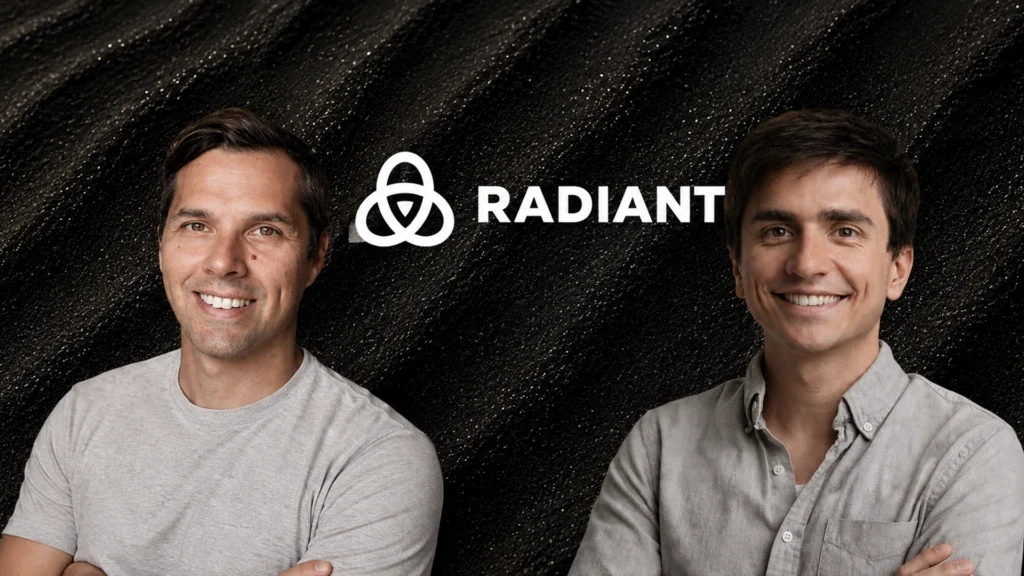
Enter Doug Bernauer and Radiant.
Founded by a 12-year SpaceX veteran and backed by Andreessen Horowitz (a16z) through their American Dynamism initiative, Radiant is building the world’s first portable, zero-emission micro-reactor: the Kaleidos.
Instead of trying to build a multi-gigawatt civil engineering project that takes fifteen years and billions of dollars to construct in the field, Radiant is building 1-megawatt nuclear generators inside factories. They fit inside a standard ISO shipping container, arrive on a flatbed truck, and set up in under forty-eight hours.
The Problem: The Remote Power Bottleneck
For decades, remote operations have lived with a massive energy tax.
1. The Fuel Supply Line Trap
Whether you are operating a mine in northern Canada, a military outpost in the desert, or a islanded data center, shipping diesel fuel is a primary cost driver. In remote or contested environments, transporting fuel can account for up to 80 percent of total operational costs. A single disruption to the fuel convoy halts operations completely.
2. The Site-Built Nuclear Disaster
Traditional nuclear power plants are sprawling, bespoke construction sites. Each plant requires unique architectural engineering, local civil workforce management, and unpredictable environmental permitting. When a project is built in the field rather than on an assembly line, cost overruns and multi-year delays are practically guaranteed.
Doug Bernauer realized that to make nuclear energy ubiquitous, you must stop treating a nuclear reactor like a building and start treating it like a manufactured hardware product.
The Playbook: SpaceX Discipline Applied to Physics
Doug Bernauer spent twelve years at SpaceX, where he worked on refueling architectures for Starship. When analyzing how to power human habitats on Mars, he realized that solar panels were insufficient for heavy industrial work. The only mathematically viable solution was portable nuclear power.
When he realized the technology was desperately needed on Earth first, he left SpaceX to found Radiant.
1. High-Temperature Gas Cooled Reactor (HTGR)
Instead of using water or liquid sodium, Radiant designed the Kaleidos around a High-Temperature Gas Cooled Reactor using helium gas as a coolant. Helium is chemically inert, non-corrosive, and cannot catch fire or explode.
By operating at high temperatures, the Kaleidos achieves high thermal efficiency while using TRISO (Tristructural-Isotropic) particle fuel. TRISO fuel particles are encapsulated in carbon and ceramic layers, making them physically incapable of melting down even under catastrophic loss of coolant.
2. The Factory-Fabricated ISO Container
The entire 1-megawatt electrical (3-megawatt thermal) system is engineered to fit within a standard 20-foot ISO shipping container.
Just as Apollo Atomics shrunk the steam generator to build truck-sized micro-reactors for data centers and Hadrian automated aerospace parts manufacturing in software-defined factories, Radiant eliminates site construction entirely. The Kaleidos is assembled in a controlled factory environment, quality-tested, shipped fully loaded with fuel, and plugged directly into local microgrids.
3. The 8-Year Refueling Cycle
The Kaleidos is designed to operate continuously at full capacity for up to eight years without needing a single fuel reload.
When the fuel cycle is complete, the entire containerized unit is loaded back onto a flatbed truck and returned to a centralized facility for refueling and servicing. The end user never touches nuclear materials or handles spent fuel.
Founder Lessons: Hardware Speed and American Dynamism
1. Leverage Proven Principles for Unsexy Bottlenecks
Radiant did not invent unproven nuclear physics. They combined TRISO fuel technology developed by the US Department of Energy with modern high-temperature gas cooling and advanced manufacturing.
By focusing innovation on packaging, thermal efficiency, and transportability rather than exotic physics, they created a rapid engineering pipeline.
2. Design for the Hardest Customer First
By targeting high-value defense, islanded microgrids, and disaster relief operations where power costs are astronomically high, Radiant unlocked an immediate commercial market that can afford early-generation hardware.
This mirrors Quantum Systems deploying tactical drones on the front lines in Ukraine to harden their software-defined hardware against real-world friction.
3. Maintain Complete Operational Control
Doug Bernauer brought SpaceX’s intense vertical integration culture to Radiant. They test their own turbomachinery, build custom high-temperature loops, and simulate failure scenarios in-house. When you control the hardware manufacturing pipeline, your iteration loops happen in days rather than months.
Final Word
The future of clean energy will not be won by waiting decades for grid interconnections or building massive, site-constructed power plants.
Radiant is proving that the nuclear renaissance is driving down the highway inside a shipping container. By turning nuclear power into a portable, factory-built appliance, Doug Bernauer and his team are ensuring that clean, reliable power can be deployed anywhere on Earth at a moment’s notice.

Tumisang Bogwasi
Tumisang Bogwasi is an award-winning entrepreneur and strategist sharing insights on business growth, leadership, and innovation.