Terafab: Why Elon Musk is Moving AI to Space
Artificial General Intelligence (AGI) is no longer just a software problem. It is a massive, multi-planetary hardware problem.
As companies race to build larger AI models, they are slamming into a physical brick wall: Earth’s power grid is tapped out. To achieve the compute power required for the future of AI, we don’t just need better code. We need a “Terawatt of compute.”
To put that in perspective, if you combined every single chip manufacturing fab on Earth today, it would only produce about 2% of what is needed.
Elon Musk recently announced Terafab, a monumental initiative combining the forces of Tesla, xAI, and SpaceX to build the largest chip manufacturing facility in history.
But the most radical part of the plan isn’t what they are building on Earth. It’s where they are sending it.
The Problem: The Terawatt Ceiling
Increasing power on Earth is becoming exponentially harder. You run out of physical space, you face regulatory bottlenecks, and you hit local “NIMBY” (Not In My Backyard) resistance to new power plants.
Earth only receives about half a billionth of the sun’s energy. If we rely strictly on terrestrial power grids to fuel AI data centers, human progress will artificially stall.
The Playbook: Total Vertical Integration
Before you can send compute to space, you have to completely reinvent how chips are manufactured on Earth.
Legacy chipmakers rely on highly fragmented, global supply chains. Designing a chip, creating the lithography masks, printing the logic, testing the memory, and packaging it requires shipping materials across the world. Iteration takes months.
Musk’s new Terafab in Austin, Texas, is designed to kill this supply chain friction entirely.
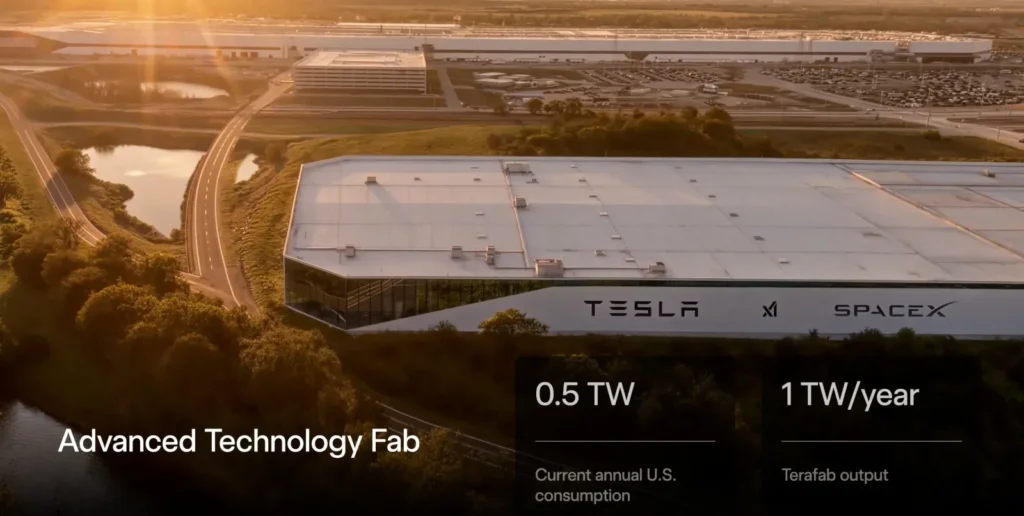
It houses everything under one roof. They can create a lithography mask, manufacture the chip, test it, and immediately iterate on a new design without the product ever leaving the building. This creates an insanely fast, recursive loop for hardware development that does not exist anywhere else in the world.
The Macro Bet: The Orbital Cloud
Once Terafab solves the manufacturing bottleneck, SpaceX’s Starship solves the deployment bottleneck.
Musk predicts that within the next few years, it will actually be cheaper to host AI compute in Low Earth Orbit than on the ground.
Here is why the “Orbital Cloud” works:
- Always Sunny: Space doesn’t have weather, seasonality, or atmospheric attenuation. Solar panels in orbit generate at least 5x the power they do on Earth.
- Zero Weather-Proofing: Space solar panels and data centers don’t need heavy glass frames or weather-proofing to protect them from wind and storms.
- Natural Cooling: The vacuum of space is highly hostile, but it provides a massive advantage for heat rejection. With properly designed radiators, the extreme heat generated by terawatts of compute can be managed efficiently.
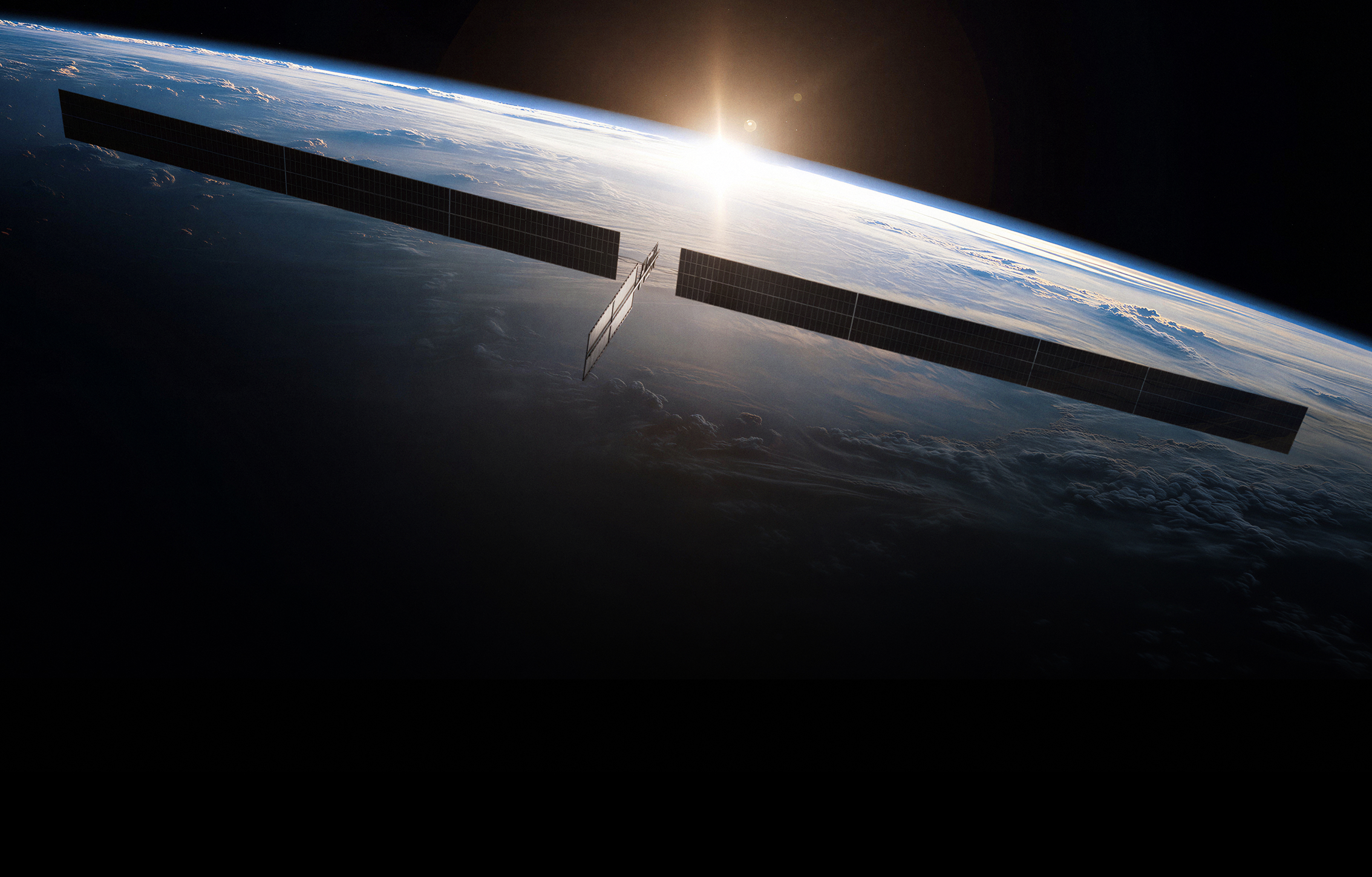
By leveraging Starship’s massive payload capacity (scaling to 10 million tons to orbit per year), Musk aims to put the data centers where the energy actually is, rather than trying to pipe the energy down to Earth.
Founder Lessons: Unconstrained Thinking
- Delete the Supply Chain: The Austin Terafab is the ultimate expression of the 5-Step Algorithm. If the global supply chain is too slow to iterate on chip design, delete the supply chain. Put the entire process in one building.
- Arbitrage Physics: Stop trying to solve problems where the environment is fighting you. If scaling power on Earth is politically and physically constrained, the best founders look for a new environment (space) where the constraints don’t exist.
Final Word
The companies that dominate the next decade will not be pure software companies. They will be vertically integrated empires that control the physical infrastructure beneath the software.
Terafab is the ultimate warning shot to the tech industry. If you want to win the AI race, you can’t just rent cloud space. You have to build the factory, launch the rocket, and capture the sun.

Tumisang Bogwasi
Tumisang Bogwasi is an award-winning entrepreneur and strategist sharing insights on business growth, leadership, and innovation.