In November 2022, three SpaceX executives quit on the same day to build a weapon their old employer was never going to build.
Four years on, the U.S. Navy has moved that weapon into production, the Army wants to fire it from trucks, and investors have priced the company at $13 billion.
The call that started it
Late in 2022, a Navy officer called Bryon Hargis, who was running sales and business development for SpaceX’s national security satellite programs. He wanted something SpaceX did not sell: a hypersonic missile maker that could actually deliver.
Hargis had spent close to two decades around Pentagon sales, and he had heard the complaint before. The vendors who built hypersonic weapons ran on the same clock and price tags as the rest of the defense industrial base: expensive, slow and single-source.
He took the problem to two colleagues. Sean Pitt had run SpaceX’s launch and human spaceflight sales across Europe, closing more than $1.25 billion in export deals.
Andrew Kreitz ran SpaceX’s launch forecasting and government cost proposals, after years at Goldman Sachs executing more than $10 billion in aerospace and defense mergers.
Between them sat the pieces of a company: how to sell weapons abroad, how to price a program the government would fund, and proof that the Pentagon’s hypersonic pipeline had a hole in it. In November 2022 all three left SpaceX and founded Castelion.
A company built to embarrass the primes
The pitch was blunt from the start. Lockheed Martin, RTX and the other primes were not going to build affordable hypersonic missiles, because nothing in how they are paid rewards trying. A contractor billed on cost-plus terms has little reason to make a weapon cost less.
SpaceX did not out-engineer the aerospace industry so much as out-organize it. It owned more of its supply chain, flew hardware instead of writing paper studies, and treated a rocket lost on the pad as data rather than scandal.
Castelion’s founders bet that the same three moves carry over from orbital rockets to strike weapons: vertical manufacturing, rapid and repeated flight testing, and a tolerance for failing in public.
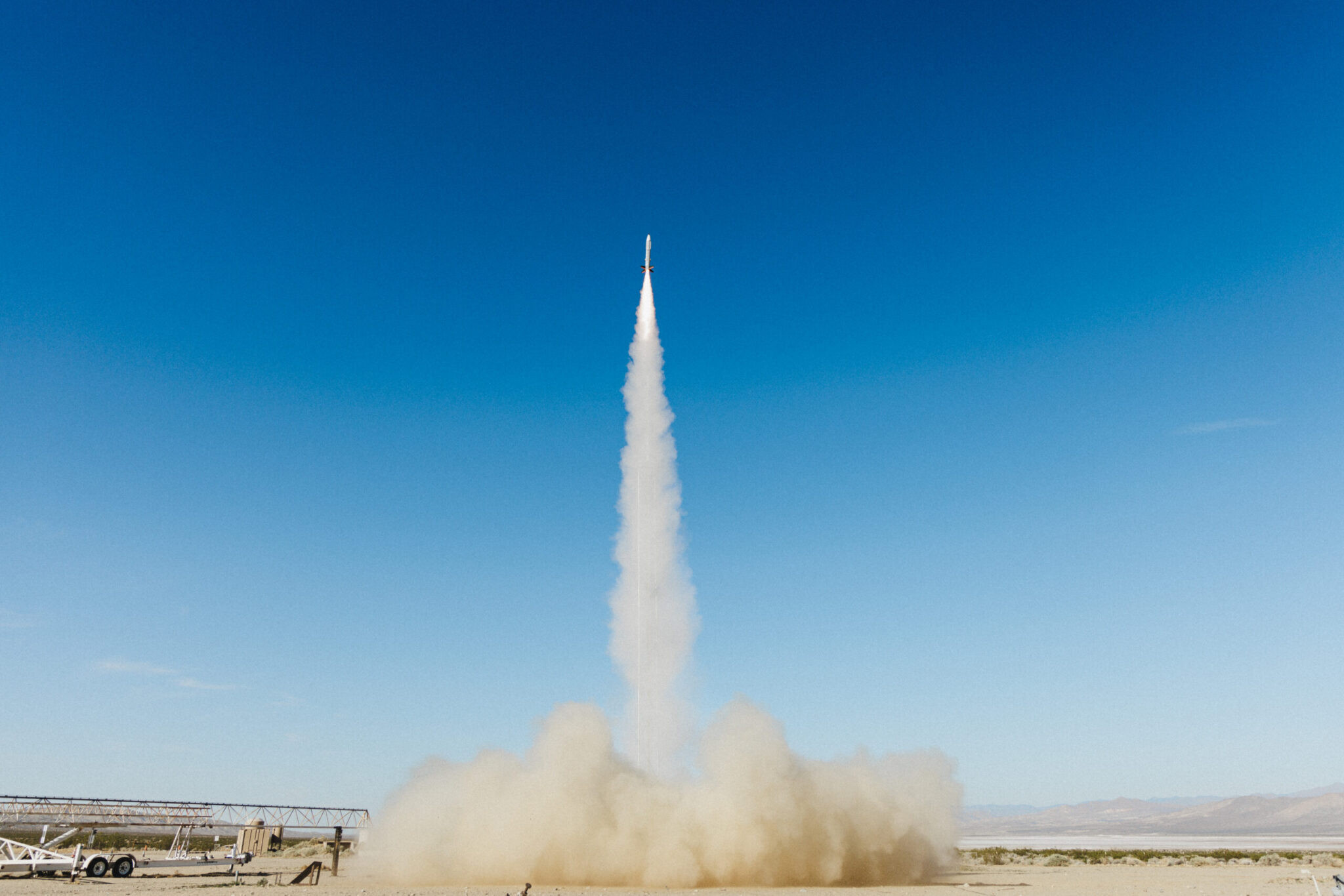
Forbes reported that the company ran more than twenty development flight tests in 2025 and aimed to build more than fifty missiles that year. Nothing in the hypersonic programs it wants to displace runs at that cadence.
Castelion, by the numbers
- Founded November 2022 by Bryon Hargis (CEO), Sean Pitt (COO) and Andrew Kreitz (CFO), all SpaceX alumni
- Blackbeard, a hypersonic strike missile built to fly faster than Mach 5
- April 2026: $105 million Navy contract to integrate Blackbeard onto the F/A-18E/F
- June 2026: $23.4 million order for 50 early operational capability missiles
- 16 September 2026: Navy production order worth up to $200 million
- About $1.23 billion in equity raised, plus $280 million in debt and credit facilities
- Valued at $13 billion after its August 2026 Series C
- Manufacturing at Project Ranger in Rio Rancho, New Mexico, and in Torrance, California
Blackbeard is priced against the missile it replaces
Blackbeard is built to travel faster than Mach 5. Reuters, drawing on Pentagon budget documents in April 2026, put its average cost at roughly $384,000 a unit, inside a Navy plan to buy thousands of air-launched hypersonic missiles over five years.
That is a program average from budget paperwork, not a price list, and other reporting describes the company aiming to hold cost near half a million dollars. Read either way, it sits an order of magnitude or more below existing U.S. hypersonic weapons.
The Navy stopped testing and started buying
The Navy’s money arrived in steps. In April 2026 it awarded Castelion $105 million to integrate Blackbeard onto the carrier-based F/A-18E/F. In June it ordered 50 early operational capability missiles for $23.4 million.
On 16 September it moved the program into production, with a delivery order worth up to $200 million for an initial lot of weapons, covering manufacture, assembly, testing and delivery to the fleet.
The Navy’s decision to move into production reflects its confidence in the Blackbeard program, and the progress we’ve made together.
Bryon Hargis, co-founder and CEO, September 2026
Two days later, on 18 September, a Super Hornet flew from Naval Air Station Patuxent River carrying two Blackbeard test articles. Neither was released. It was a captive-carry flight, a step toward fielding the weapon in 2027.
Blackbeard is also slated for the sea. The Defense Post reports it is planned for Marauder, the 180-foot unmanned vessel built by Saronic, another company in this newsletter making the same argument about speed against the primes.

The Army wants it on a truck
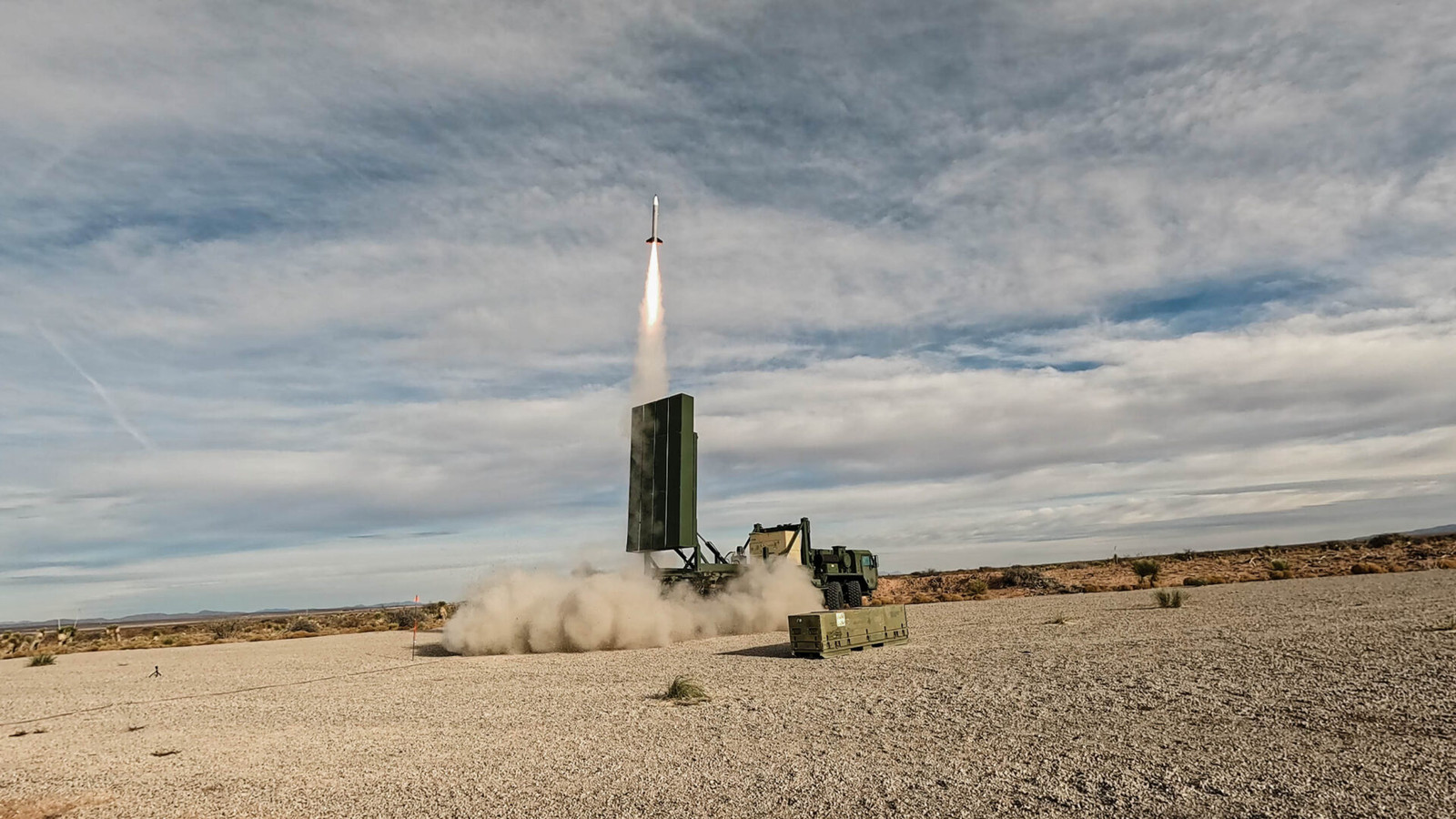
On 8 October, Castelion posted the first public image of a ground-launched Blackbeard, fired from an enclosed launcher on a high-mobility truck. Its caption was short: container-compatible, built to move with the fight.
The Army’s roadmap starts with a modified rocket pod, moves to dedicated ground-launch prototypes, and ends with a flight using the HIMARS fire-control system. Its stated aim is about 80 percent of the capability planned for Precision Strike Missile Increment 4, at a far lower cost per round.
That is the same pitch sold to a second customer. One missile family, built at rate, carried by a carrier jet, a truck and possibly an unmanned ship.
Four rounds, counted carefully
Castelion’s fundraising reads like the same argument made to a bigger room each time. A $14.2 million seed came in October 2023, co-led by Andreessen Horowitz and Lavrock Ventures.
In January 2025 it announced $100 million: a $70 million Series A led by Lightspeed Venture Partners, plus $30 million of venture debt from Silicon Valley Bank. In December 2025 it closed a $350 million Series B led by Altimeter and Lightspeed.
The August 2026 Series C was billed as $1 billion. It was $800 million of equity, co-led by JPMorganChase’s Strategic Investment Group, Andreessen Horowitz and Carlyle, plus a $250 million revolving credit facility.
That distinction matters. The $13 billion valuation applies to the equity, and a credit line is capacity rather than cash. Counted that way, Castelion has raised about $1.23 billion in equity, with another $280 million in debt and credit on top.
$13B
Castelion’s valuation after its August 2026 Series C
Set on $800 million of new equity, not on the $1 billion headline.
The investor list tracks the story. The first checks came from defense-focused funds like Lavrock. By the Series C, a bank’s strategic arm and a private equity firm were co-leading, which is not where pre-revenue hardware usually finds its money.
None of this makes Castelion a settled bet. A $13 billion valuation prices in manufacturing that has not happened yet: fielding on schedule in 2027 and output well beyond fifty a year, inside a budget process that has killed ambitious programs before.

The company went from a $350 million round to a $13 billion valuation in eight months. Nothing says the reverse cannot happen as fast if one flight test, contract or budget cycle goes the wrong way.
Founder lessons from the launch pad
Sell what the customer is already asking for
Castelion did not discover a market gap. A customer told the founders where it was: a Navy officer called Hargis directly and described a problem that was funded, urgent and unmet.
The founders skipped the years most hard-tech startups spend wondering whether the government will buy, because someone who controlled a budget had already said so out loud.
Leave together, not alone
Hargis, Pitt and Kreitz did not hire each other after the idea existed. They left on the same day because the idea needed all three at once.
International sales, government pricing and finance at scale are three different jobs. Castelion had all three filled on day one, because the founding team was assembled before the company was.
Price against the alternative, not against your own costs
Blackbeard’s number that matters is not its own price. It is what the other missile costs. A unit near $384,000, against millions or tens of millions for existing hypersonic weapons, is a claim made relative to what the Pentagon already pays.
The pitch works because the alternative price is public and enormous, not because Castelion’s manufacturing cost is impressive in isolation.
Sell one product to many carriers
The same missile is now heading to a carrier jet, a truck launcher and possibly an unmanned ship. Each new platform is a new buyer for production that already exists, not a new program to fund from scratch.
That is where cadence turns into a moat. A legacy prime builds a bespoke weapon per customer on a slow clock. Castelion is selling one product line, built at rate, to whoever can carry it.
Final word
Castelion compresses the pattern this newsletter keeps finding. Three people quit the same job on the same day to fix a problem a customer described to them directly.
By October 2026 the Navy was buying the result, the Army was planning to fire it from trucks, and the bet carried a $13 billion price. Whether Castelion can build enough Blackbeards to make that number hold will be decided in a factory in New Mexico, not in a press release.
Sources
- TechCrunch, Castelion hits $13B valuation to mass-produce hypersonic missiles, August 20 2026
- PR Newswire, Castelion Raises $1 Billion Series C to Scale Production of Low-Cost Hypersonic Weapons, August 2026
- Axios, reporting on the $800 million Series C equity round and $250 million revolving credit facility, August 2026
- Castelion, Announcing Castelion, October 4 2023
- Castelion, Castelion Announces Series A Funding, January 29 2025
- Forbes, The Military Desperately Needs More Missiles. Startup Castelion Wants to Fix That., December 5 2025
- Tectonic Defense, Castelion Closes $350M Series B, December 2025
- U.S. News & World Report, Hypersonic Weapon Startup Castelion Wins $105 Million Navy Contract for F/A-18 Integration, April 24 2026, citing Reuters
- Naval News, Castelion Secures U.S. Navy Production Order for Blackbeard Hypersonic Weapon, September 2026
- The Defense Post, US Navy Orders $200M in Castelion Blackbeard Hypersonic Weapons, September 16 2026
- USNI News, Super Hornets Sortie with Blackbeard Missiles in Latest Test, October 7 2026
- The War Zone, Blackbeard Hypersonic Missile Shown Being Fired From Ground Launcher, October 8 2026
- Interesting Engineering, US Navy orders Blackbeard hypersonic missile capable of reaching 3,800 mph, September 2026
- Castelion, company site, castelion.com, accessed October 2026