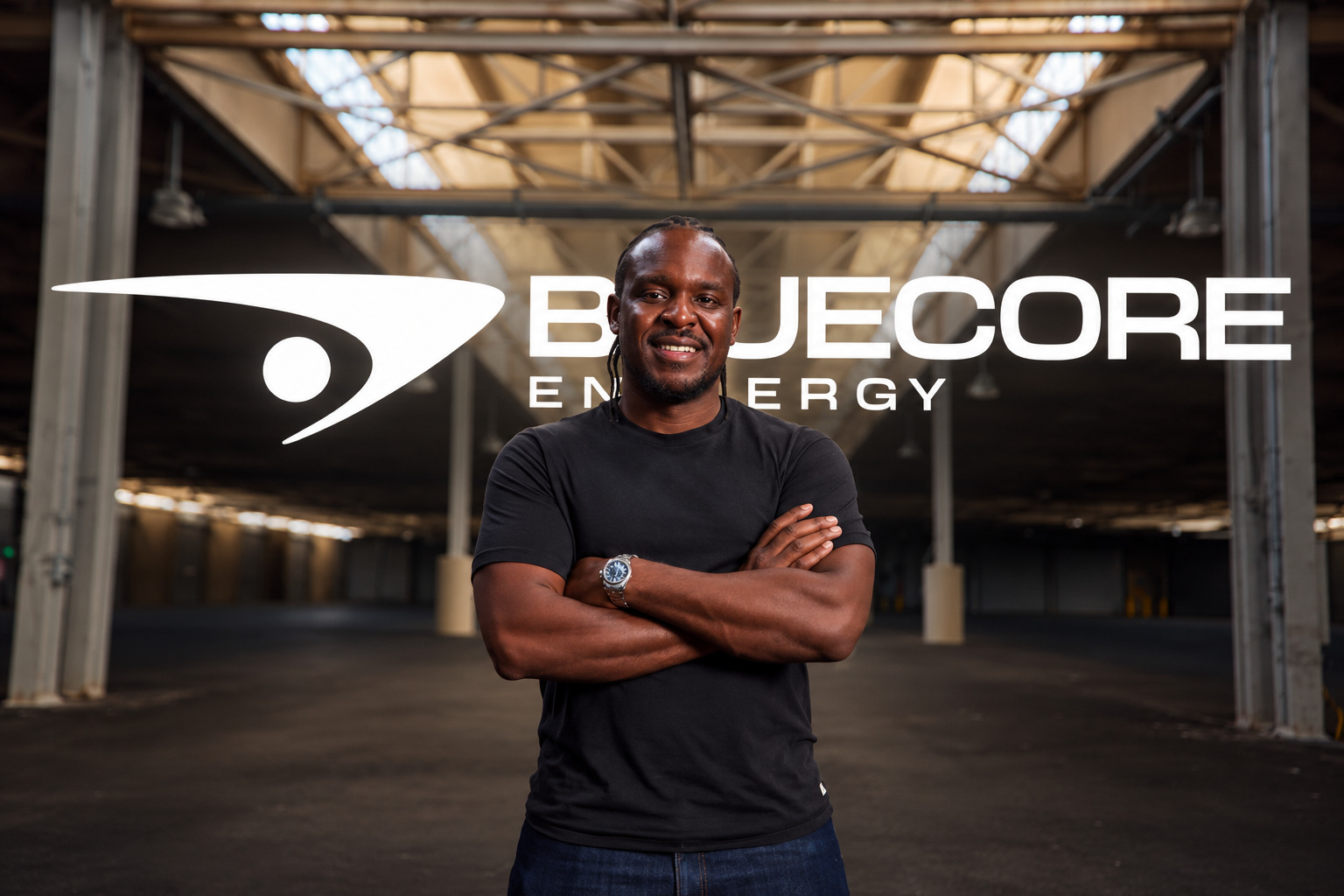
California has not permitted a new nuclear power plant since 1976. In January 2026, Kofi Asante quit his job to start one there anyway.
His answer to the permit problem was not a lobbying campaign. It was a barge.
A port is a power station that forgot to build itself
Ships do not switch off when they dock. A container vessel at berth keeps running auxiliary diesel engines to hold up refrigeration, lighting and pumps, and it does that parked in the middle of a city.
California moved against it. The Air Resources Board’s At Berth rule requires ocean-going vessels to plug into shore power or use an approved control, covering container, cruise and refrigerated ships from 2023, with tankers and car carriers following in 2025.
The Port of Long Beach answered with about $120 million of shore power expansion, and can now serve close to 90 percent of container vessel calls at berth. That solved an emissions problem by converting it into an electricity problem.
Ocean-going vessels account for roughly 90 percent of at-berth energy demand at Long Beach, about 1,049 GWh a year. All of it now has to come off a grid that serves southern California and is not short of other claims on it.
Asante puts the wider version of that plainly. “We’re a few years away from the biggest energy crisis in a generation,” he told CBS Los Angeles in August 2026. Ports are only the first customer; he has named AI data centres as another.
The founder came from the dock, not the reactor
Kofi Asante has no nuclear background. He left Tufts in 2017 with a degree in political science and entrepreneurial leadership, and went to Uber.
There he worked in the Advanced Technologies Group and at Uber Freight, and helped launch Powerloop, a trailer-pooling service for trucking carriers. The thread running through that is not software. It is the physical movement of goods.
He went next to Elroy Air, an autonomous hybrid-electric aircraft company, where he ran strategy. Then to Arc, which builds electric boats. Then a spell as a venture partner at Rackhouse.
Freight, then aircraft, then vessels. Each move landed nearer the same bottleneck: the things that carry cargo need power, and the places where cargo stops do not have enough of it.
The specific idea came off the dock. Asante had worked with Port of Long Beach leadership on zero-carbon infrastructure and vessel projects, which is exactly where the gap between what the port was ordered to do and what the grid could supply becomes visible.
He left his job in January 2026 to build the answer. Forbes has described him as the first Black founder of a nuclear company.
Bluecore, by the numbers
- Founded 2026 by Kofi Asante, founder and CEO, headquartered at the Port of Long Beach
- Compact water-cooled small modular reactor on a floating barge, about 10 MWe continuous
- Refuelling needed only once every few years
- Roughly 15,000 homes, or the power needs of a major port
- Five layers of protection: fuel core, cladding, reactor vessel, steel containment and a water shield
- $10 million pre-seed, July 2026, led by Slauson & Co.
- $50 million seed, September 8 2026, led by Silverton Partners, reported as inclusive of the pre-seed
- Investors include Harlem Capital, Precursor Ventures, Visible Hands, LMNT, Collab Capital, Chris Larsen of Ripple and Kevin Hart’s HartBeat Ventures
- Berth 48 at the Port of Long Beach leased for building and testing
The product is a reactor that can leave
Bluecore’s design is deliberately unexciting where it counts. It is a water-cooled reactor, the same basic physics the US Navy has run at sea for seventy years, heating water into steam that drives a turbine.
My team and I took nuclear reactor technology that’s been running power plants safely for 70 years, made it smaller and put it on a barge.
Kofi Asante, founder and CEO, August 2026
The safety case is layers: uranium inside a thick steel pressure vessel, then cladding, containment and a water shield. The novel part is not the reactor. It is the hull underneath it.
A power plant is a site. A site needs land, a permit, a grid connection and, in California, relief from a moratorium that has held since 1976. A barge is none of those things.
It is built in a yard, towed to a berth and tied up beside the customer. If the demand moves, the plant moves. That is the whole argument, and it is a regulatory argument wearing engineering clothes.
Whether the 1976 ban even reaches a reactor on a barge is unsettled. The law was written for plants built on land, and it is not clear it captures a floating small modular reactor. That ambiguity is the opening Bluecore is working in.
Washington has started to meet it. The Nuclear Regulatory Commission and the Coast Guard signed a memorandum of understanding to coordinate oversight of civilian floating nuclear plants, and the NRC has signalled that existing rules can license maritime reactors.
Bluecore opened formal engagement with both in August 2026. Nobody has licensed a commercial floating reactor in American waters, so the file the company is starting is close to the first of its kind.
The port signed, which is the part that is hard to fake
In July 2026 the Port of Long Beach signed a cooperation agreement with the Federal Maritime Administration to help establish safety standards for small modular reactor technology. The port was not waiting for the rules to arrive. It went to help write them.
The port then leased Bluecore space at Berth 48, where the company is building and testing its reactor. A lease is a weaker signal than a licence and a far stronger one than a letter of intent.
For a company less than a year old with no operating reactor, a working berth inside one of the busiest container ports in the United States is the most credible thing it owns.
Fifty million dollars, and a total two outlets report differently
Bluecore’s funding is reported two ways, and the difference matters to anyone tracking how much runway the company actually holds.
What every account agrees on: a $10 million pre-seed announced in July 2026 and led by Slauson & Co., then a $50 million seed announced on September 8, led by Silverton Partners and closed in about eight weeks.
The Register and Axios both report the $50 million as inclusive of the pre-seed, which puts the total raised at $50 million. TechCrunch’s account reads as two separate rounds, which would put it at $60 million.
Inclusive is the more careful reading, because it is stated outright rather than inferred from two headlines. Call it $50 million raised, and note that one well-sourced outlet counts it higher.
1976
The last year California permitted a new nuclear power plant
Bluecore’s answer was to stop being a power plant.
The cap table is unusual for a nuclear company. Alongside Harlem Capital, Precursor, Visible Hands, Collab Capital and LMNT sit Chris Larsen of Ripple and Kevin Hart’s HartBeat Ventures, plus angels out of Tesla, Uber, Amazon and Google.
What has actually been built so far
This is where a hard-tech story earns or loses its credibility, so it is worth setting out plainly what exists today.
Bluecore has the Berth 48 lease, a barge and a test reactor pressure vessel. It is building a reactor module that carries no fuel and is heated electrically, to prove out monitoring, sensors and control systems.
What does not exist: a fuelled reactor, an operating licence, or an application for one. The company is years away from selling power, and it says so itself.
The precedent is thin, and it is not American. The only floating nuclear plant in commercial operation anywhere is Russia’s Akademik Lomonosov, two 35 MWe reactors on a hull, in service since May 2020 and past its first billion kilowatt hours.
That proves the physics works on a barge. It proves nothing about whether a company less than a year old can carry a first-of-a-kind licence through the NRC, the Coast Guard and the state of California.
Founder lessons from the dockside
Work the customer’s problem before you own the company
Asante did not go researching the port market. He had already sat with Port of Long Beach leadership on zero-carbon infrastructure and vessel projects, which is where the mismatch between the mandate and the available power was impossible to miss.
By the time Bluecore existed, the customer, the site and the problem were all things he had worked on in a previous job. That is a far shorter path than any amount of customer discovery.
Design around the constraint you cannot win
California will not permit a new nuclear plant. Fighting that head-on is a decade-long political campaign with poor odds and no revenue at the end of it.
Putting the reactor on a barge does not defeat the moratorium. It changes what the thing is, from a site into a vessel, and hands the question to regulators who have already said their existing rules can accommodate one.
Buy the hardware that makes you look real
Before the seed closed, Bluecore had a berth, a barge and a test pressure vessel. None of that is a working reactor, and all of it is the difference between a nuclear pitch and a nuclear company.
For founders in capital-heavy categories the signal is rarely the deck. It is physical assets an investor can stand next to, bought early enough and cheaply enough to prove intent.
Start the regulator conversation before you need an answer
Bluecore opened formal engagement with the NRC and the Coast Guard in August 2026, long before any licence application. In a first-of-a-kind category the regulator is not an approval step at the end. It is a design input at the start.
The first prototype makes the point. It is unfuelled and electrically heated, built to prove the monitoring and control systems a licence will eventually turn on, rather than to make any power at all.
Final word
Bluecore has raised $50 million against a reactor that does not yet exist, in a state that will not permit the plant it replaces, for a customer being ordered by law to buy more electricity than it can currently get.
Every part of that sentence is a risk except the last one. The demand is real, dated and written into California regulation, which is a better starting position than most hard-tech companies are ever handed.
What is unproven is everything between the demand and the delivery: fuel, licence, hull, and a first-of-a-kind safety case carried by a company less than a year old. The barge is clever. The barge is not the hard part.
Sources
- TechCrunch, Bluecore Energy raises $10M to build portable nuclear reactors on barges, July 21 2026
- TechCrunch, Nuclear startup Bluecore Energy raises $50M seed round, just two months after launch, September 8 2026
- Axios, Bluecore raises $50 million for port-powering nuclear barges, September 8 2026
- The Register, Floating nuclear startup Bluecore lands $50M funding before setting sail, September 8 2026
- Bloomberg, Bluecore Energy Raises $50 Million for Maritime Nuclear System, September 8 2026
- CBS Los Angeles, Port of Long Beach signs deal to build small offshore nuclear reactors, August 17 2026
- Forbes, Bluecore Floating Nuclear Power Plant A First For Black Entrepreneur, August 18 2026
- Bluecore Energy, company site, bluecore.energy, accessed October 2026
- California Air Resources Board, At Berth Regulation, ww2.arb.ca.gov
- Port of Long Beach, shore power expansion and Green Port programme, polb.com
- World Nuclear News, Russia’s floating nuclear power plant passes one billion kWh