The WeDash Mandate: Why DoorDash Forces Its Engineers to Deliver Food

When a company is small, the founder is on the front lines. You take the customer support calls. You pack the boxes. You feel every single friction point in your product.
But as the company scales from $1M to $100M, a dangerous shift occurs.
The founders and the builders retreat to the “Ivory Tower.” They stop interacting with the physical product and start managing the company purely through spreadsheets, Jira tickets, and data dashboards.
This creates one of the most fatal blind spots in business: The Dashboard Delusion.
To understand how to fix it, we have to look at the ruthless, highly controversial operational mandate instituted by DoorDash.
The Pain Point: The Dashboard Delusion
When you run a company from a dashboard, human pain is abstracted into a percentage.
If a software engineer looking at a screen sees a “99% On-Time Delivery Rate,” they celebrate. It looks like a massive success on a quarterly report. But what the dashboard hides is the visceral reality of that remaining 1%.
That 1% represents a cold pizza, a ruined family dinner, an angry restaurant owner, and a frustrated delivery driver standing in the rain. Dashboards breed operational apathy.
When your highest-paid decision-makers (your executives and software engineers) are completely detached from the physical reality of the frontline worker, they build features in a vacuum. They build software that works beautifully in a Silicon Valley office, but completely fails in the chaos of a real-world restaurant kitchen.
The Radical Story: The WeDash Mandate
DoorDash recognized that it could not afford to lose its connection to the street level.
So, CEO Tony Xu instituted a core policy called WeDash.

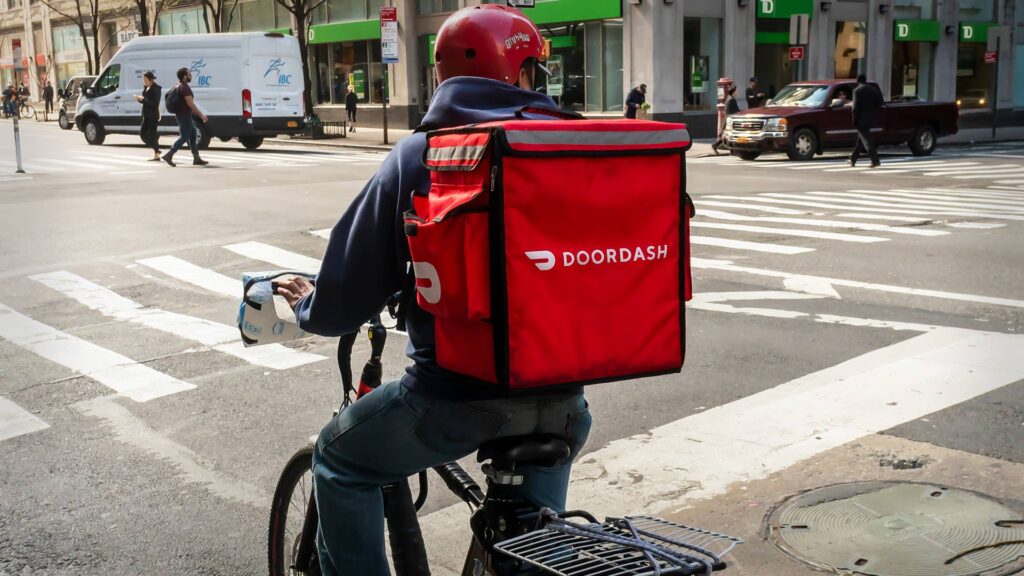
The mandate is non-negotiable: Every single month, every employee in the company must complete a food delivery (or shadow a customer support agent).
This includes the CEO. It includes the marketing interns. And most importantly, it includes the $400,000-a-year backend software engineers.
When the policy was re-enforced heavily a few years ago, there was a famous uproar. Software engineers took to anonymous forums like Blind to complain, arguing that their time was “too valuable” to be spent driving around delivering tacos for minimum wage.
DoorDash leadership didn’t flinch. Treating the mandate as a ruthless filter for talent density, their response was essentially: If you don’t want to deliver food, you shouldn’t work here.
Why? Because when an engineer is forced to use the app they built while trying to find an apartment complex in the dark, they suddenly spot the UI flaws they ignored in the office. They feel the friction. The code becomes personal.
The Founder’s Playbook: Breaking the Ivory Tower
You cannot understand a product from a dashboard. Empathy does not scale on a spreadsheet.
Here is the Frontline Playbook for scaling founders:
1. Mandate Frontline Friction: Your builders must eat their own cooking. If you run a SaaS company, your developers must do a monthly customer support shift. If you run a retail brand, your executives must work the cash register for a day.
2. No Exemptions for “High Earners”: The pushback will always come from your most expensive talent. “My hourly rate is too high to do customer support.” That is exactly why they need to do it. The cost of a disconnected engineer building the wrong feature for six months is infinitely more expensive than losing four hours of their coding time to a frontline shift.
3. The Immediate Feedback Loop: The frontline shift isn’t just a humility exercise; it is an R&D operation. Mandate that every employee must return from their frontline shift with one specific, actionable fix for the product.
As you scale, gravity will constantly pull your leadership team away from the customer and toward the boardroom. Just as Brian Chesky had to dive back into the details at Airbnb, you must actively fight the Dashboard Delusion. Force your team out of the building.

Tumisang Bogwasi
Tumisang Bogwasi is an award-winning entrepreneur and strategist sharing insights on business growth, leadership, and innovation.