On 17 September 2026, Crusoe announced a $3.9 billion Series F at a $30.9 billion post-money valuation. Eight years earlier it was a Denver start-up putting generators next to oil wells to catch gas that would otherwise be flared.
The company in the headline is not the company that began. Crusoe sold its flare business in 2025 and now builds data center campuses. The part that did not change is the bet: the scarce input for AI is power, and whoever controls it sets the pace.
What is Crusoe, and who founded it?
Crusoe describes itself as the AI factory company. It was founded in 2018 by Chase Lochmiller and Cully Cavness. Lochmiller is co-founder, chief executive and chairman. Cavness is co-founder, president and chief strategy officer.
Today it sells three things: Crusoe Cloud, where customers rent Nvidia and AMD GPU clusters; managed inference and fine-tuning for open models; and the data center campuses and modular units that house them.
Its named cloud customers include Cognition, Figure and Perplexity. By its own count it has more than 1,800 employees, 1 gigawatt of capacity delivered and more than 6 gigawatts of gross contracted capacity, with total contracted value above $140 billion. Those are company figures, not audited ones.
Crusoe began by turning flared gas into computing
Drilling for oil brings up natural gas. Where no pipeline exists, operators burn it off in a flare. The World Bank’s 2026 tracker says 167 billion cubic meters of gas were flared worldwide in 2025, the third annual rise in a row and the highest since 2019.
Crusoe’s first business, Digital Flare Mitigation, took that gas, ran generators on site and powered modular data centers beside the well. The first customers were bitcoin miners, because mining can be switched on and off as gas flow changes. AI workloads came later.
Crusoe sold the flare business to NYDIG in 2025
On 25 March 2025, Crusoe agreed to sell its bitcoin mining operation, including the flare business, to the bitcoin firm NYDIG. About 135 staff moved with it. The price was not disclosed.
At the time of the sale, Crusoe said the operation ran more than 425 modular data centers with over 250 megawatts of capacity across seven US states and Argentina. It said it had kept nearly 22 billion cubic feet of gas from being flared and avoided 2.7 million tonnes of greenhouse gas emissions. Nobody outside the company has checked those numbers.
The sale tells you what Crusoe decided it was. The gas arbitrage was real but small. The larger prize was building campuses for the companies that need gigawatts, and for that the flare business was a distraction.
What does Crusoe sell now?
Crusoe Cloud became generally available in December 2024. Customers rent clusters of Nvidia GB300, B300 and H200 chips and AMD MI355X chips, with managed inference and serverless fine-tuning on top.
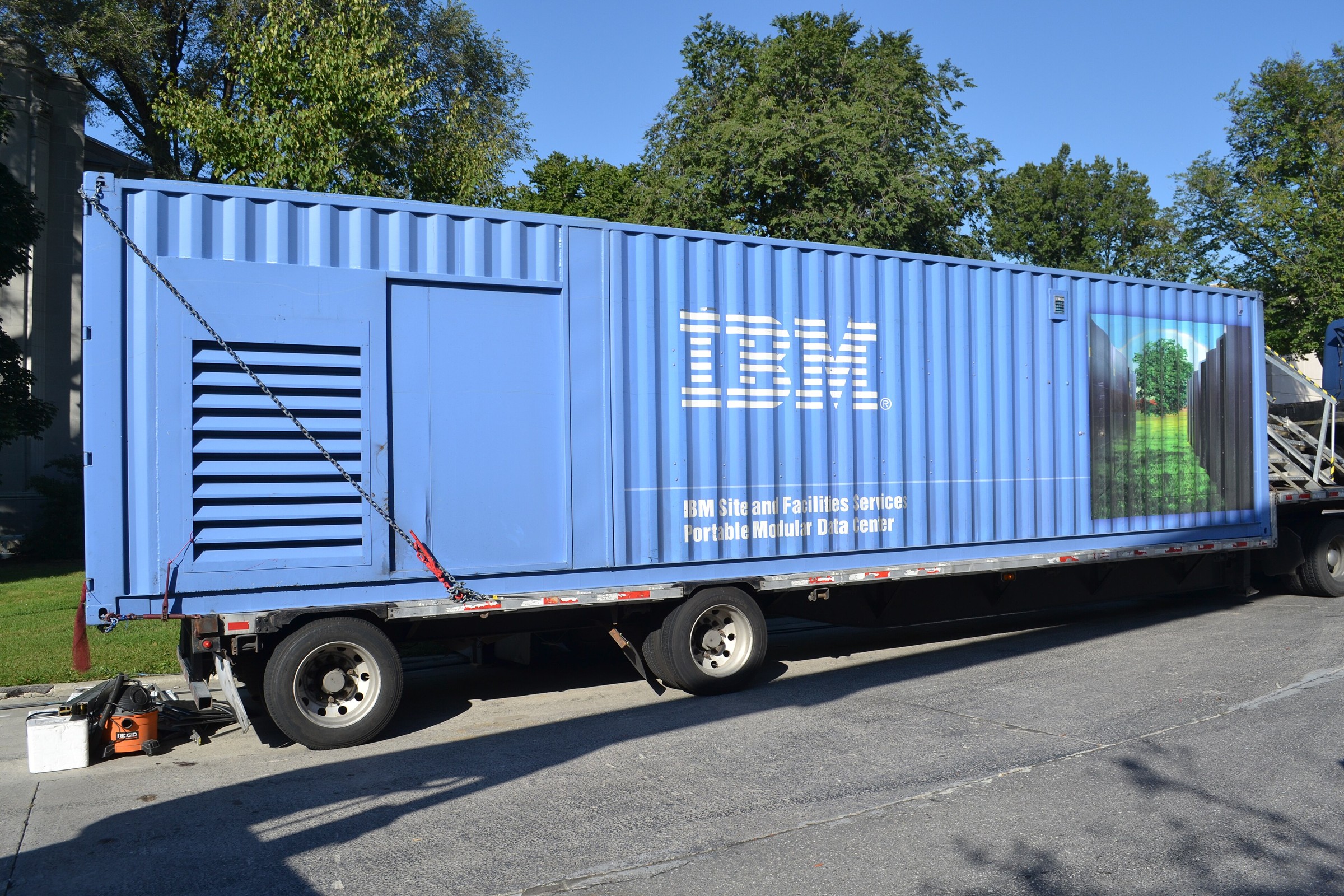
The second product is physical. Crusoe Spark is a modular AI data center built in a factory and shipped to a site, and Crusoe has opened manufacturing in Tulsa to make the parts. The third is the campus: land, power, buildings and cooling, built and then leased to a hyperscaler.
Lochmiller’s pitch for all three is vertical integration. In the Series F announcement he said “getting there means controlling the infrastructure from electrons to tokens.” Own the power, the building and the cloud, and you stop waiting on three other companies.
Crusoe’s AI infrastructure is designed around AI workloads, not general cloud
Most cloud providers began with websites and databases and added GPUs later. Crusoe Cloud is an AI cloud built around AI workloads from the start: model training, inference, and fine-tuning of open models. Cognition, Figure and Perplexity are the customers Crusoe names.
The difference shows in the physical layout. A GPU cluster for model training needs dense racks, fast networking and a great deal of power in one place. Crusoe says it was founded with an energy-first approach, which in practice means it chooses the power source first and builds the data centers around it.
That is also why modular data centers matter to the company. A Crusoe Spark unit is a factory-built AI factory that can be placed where the energy already is. It is the flare site idea, made repeatable.
How much has Crusoe raised, and who invested?
Crusoe is a private company. It is not listed, and the Series F was an initial closing of a round it expects to extend. The valuation has moved fast.
Series F was co-led by Atreides Management, Mubadala Capital and Valor Equity Partners, with Founders Fund, GIC, Nvidia, the Qatar Investment Authority, TPG, Fidelity and T. Rowe Price among others. Series E in October 2025 raised $1.375 billion at a valuation above $10 billion. Series D in December 2024 raised $600 million at $2.8 billion, led by Founders Fund.
Did Nvidia invest? Yes, in more than one round. Nvidia is also the supplier of the chips Crusoe rents out. On 22 October 2026 Crusoe added a $700 million debt facility from Neuberger Specialty Finance, secured on newly ordered gas power equipment.
Is Crusoe a good investment? Ordinary investors cannot buy its shares, and this article is not investment advice. Whether a $30.9 billion valuation is justified depends on whether contracted compute capacity is built and energised on schedule, which is the risk section below.
Abilene is the campus that made Crusoe’s name
Abilene, Texas is the flagship. In October 2024, Crusoe, Blue Owl Capital and Primary Digital Infrastructure formed a $3.4 billion joint venture for a 206 megawatt build-to-suit facility there, fully leased to a Fortune 100 hyperscaler.
The land and grid connection belong to Lancium, not Crusoe, and the $3.4 billion figure belongs to the joint venture, not to Lancium. Crusoe designs, builds and operates the buildings. The campus has since grown to 1.2 gigawatts across eight buildings.
Crusoe says the campus was built for Oracle, and that OpenAI trained a model called Astra there. That makes Crusoe the developer and co-owner of the first campus in the Stargate programme, not the owner of Stargate itself.
Microsoft took the next 900 megawatts at Abilene
On 27 March 2026, Crusoe announced a new 900 megawatt campus at Abilene for Microsoft: two buildings of 336 megawatts of IT load each, with the first due to be energised in mid-2027 and a dedicated on-site power plant with battery storage. The whole Abilene site would reach 2.1 gigawatts.
Bloomberg reported that Oracle and OpenAI had dropped a planned expansion of about 600 megawatts at the site. Crusoe signed Microsoft within weeks. One reading is a customer walking away. The other is the demand being large enough that someone else took the space at once.
Where Crusoe is building next
Crusoe’s other 2026 sites are a map of who wants power:
- Childress, Texas: a 1 gigawatt campus with Lancium, announced 15 July 2026 for an unnamed hyperscaler, with construction from the third quarter.
- Armstrong County, Texas: a Google campus near Amarillo, announced 28 September 2026, tied directly to a 265.5 megawatt wind farm.
- Wyoming: Crusoe and Tallgrass started the campus, and on 6 November 2026 Google bought the site.
- Norway: 12 megawatts live on hydropower with Polar Data Centers, and a 40 megawatt phase due in late 2027.
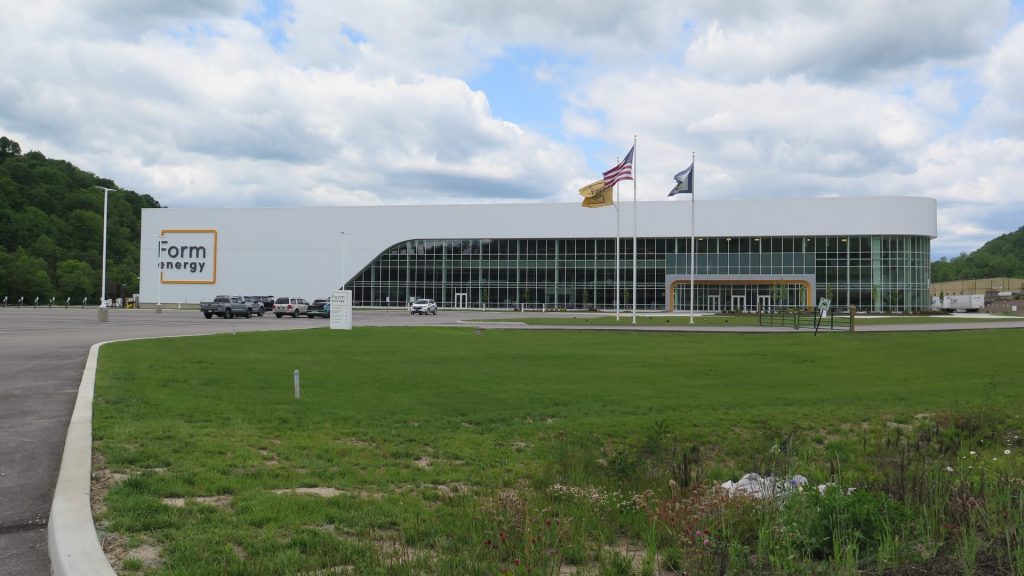
It has also announced partnerships on nuclear power with Aalo Atomics and on iron-air batteries with Form Energy. These are intentions, not operating plants. For related stories on this site, see how Fervo Energy is selling geothermal power to the same buyers, and why Terafab and Starcloud look to space for power.
The grid wait is the real bottleneck, but the number is narrower than it sounds
The usual line is that utilities tell new data centers to wait years. The best public figure comes from Lawrence Berkeley National Laboratory: for power plants that came online in 2025, the median time from interconnection request to operation was over five years.
That is for generation and storage, not for a data center asking to draw power, so it is not the same wait. What it shows is that the queue for new power is long. Lochmiller said in a Sequoia Capital interview that phases at Abilene took 200 to 300 days and that Crusoe cut switchgear lead times from 100 weeks to 22.
Speed to power is the lead argument. It is not a number anyone has published as a share of the pitch.
Does Crusoe’s environmental impact match its clean energy claims?
Crusoe’s early pitch was emissions. Capturing flared gas let it say it helped reduce emissions, and the 2.7 million tonnes figure at the time of the NYDIG sale was the headline. That figure is the company’s own.
The current campuses are different. Abilene runs on a 1.2 gigawatt grid connection from the Texas grid operator ERCOT, with gas turbines installed for reliability and to replace diesel backup, and batteries and solar planned. The Microsoft campus adds an on-site power plant. Crusoe says the Abilene buildings use closed-loop cooling that does not evaporate water, with about one million gallons to fill each building once and about 50,000 gallons a year after that. That is a company claim.
In Wyoming the planned power mix included fuel cells, gas turbines and carbon capture through Tallgrass’s hub. Clean energy in this business is a set of plans at different stages, not a single technology. Judge each campus by what is running.
What could go wrong
A good story can have a bad year, and Crusoe’s risks are specific.
First, reliability. A report by the energy site Cleanview, citing The Information, said the Abilene campus went offline for days in its first winter because of power and cooling faults. We have not seen The Information’s original, so treat that as one outlet’s account.
Second, concentration. The contracted base is a handful of buyers: Oracle for OpenAI, Microsoft and Google. If one slows its spending, the pipeline moves.
Third, politics. On 21 September 2026 Texas Governor Greg Abbott told the state’s environmental regulator to stop issuing data center permits, according to the Texas Tribune. The report does not say Crusoe’s permits were affected, but it shows how fast the rules can change.
Fourth, a question rather than a finding: Nvidia, Mubadala and Valor appear as investors, suppliers or lenders in more than one layer of the business. Whether that is healthy or circular is something analysts will argue about.
What an operator can take from Crusoe
You do not need a data center to use the pattern.
Start where the input is wasted. Crusoe began with gas nobody wanted. The cheapest advantage is a resource your competitors treat as a cost.
Sell the layer you can own, then move up. Gas became bitcoin mining, which became GPU cloud, which became campuses. Each step used what the last one built: the power, the sites, the operating team.
Know when to sell the business that got you here. The flare business was working and Crusoe sold it. The company wanted to be larger than the thing that proved it.
Crusoe is no longer a gas company
The old version of this story was about oil wells and waste. The current one is about gigawatts and who will rent them. The flare is a footnote now.
What the two versions share is a view of where AI is bottlenecked. Chips can be bought. Models can be copied. Power on a given site, on a given date, is harder. Crusoe has raised $30.9 billion worth of valuation on the belief that it can deliver it.
Sources
- Crusoe, Series F announcement, 17 September 2026. Round size, valuation, investors, customers and capacity figures.
- Crusoe, Series E announcement, 24 October 2025. Round and valuation.
- Crusoe, Series D announcement, 12 December 2024. Round, valuation and Crusoe Cloud availability.
- Crusoe, NYDIG sale announcement, 25 March 2025. The flare business sale and its scale figures.
- Crusoe, Blue Owl Capital and Primary Digital Infrastructure, joint venture announcement, 15 October 2024.
- Crusoe, Abilene expansion to 1.2 gigawatts, 18 March 2025. Lancium’s role.
- Crusoe, 900 MW Abilene campus for Microsoft, 27 March 2026.
- Crusoe, Wyoming campus update, 6 November 2026.
- Crusoe, Neuberger Specialty Finance facility, 22 October 2026.
- Crusoe, company and leadership pages. Founding year, titles and products.
- World Bank, 2026 Global Gas Flaring Tracker Report, 23 June 2026.
- Lawrence Berkeley National Laboratory, Queued Up, 2026 edition, May 2026.
- Sequoia Capital, The Data Center Is the New Unit of Compute: Crusoe CEO Chase Lochmiller, 7 May 2025.
- Bloomberg Tech, Crusoe CEO interview on the Series F, 18 September 2026.
- Cleanview, report of 17 June 2026 on Abilene, citing The Information. Single source for the reliability account.
- Bloomberg, report of 6 March 2026 on the dropped Oracle and OpenAI expansion, read through secondary summaries.
- Texas Tribune, report of 20 October 2026 on Governor Abbott’s data center permit order.
- Featured and inline photographs: see the credits in the media captions.