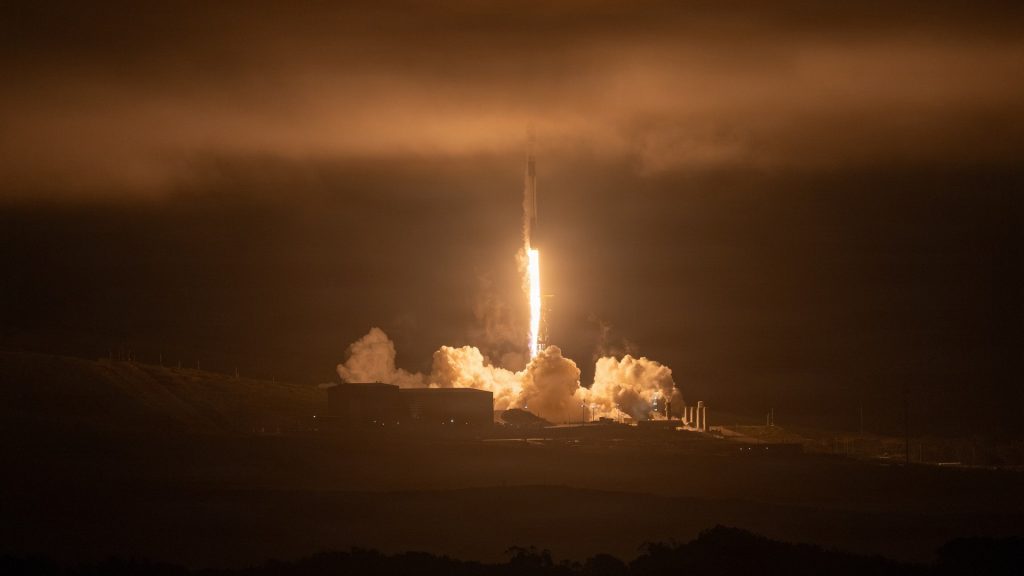
Gecko Robotics sends wall-climbing robots up boilers, tanks and ship hulls, the critical infrastructure of industry and defence, and in October 2026 the US Navy raised the ceiling on its contract with the company to $300 million. The robots are the visible part. The product is a measurement almost nobody has: how thick the steel is, everywhere, today.
The bottleneck is physical. A boiler wall, a pipeline or a warship hull loses metal to corrosion, and a visual inspection cannot show how much is left. Most owners know the thickness of their equipment at a handful of spots.
The bet at Gecko Robotics is that a complete map from a robotic inspection process is worth more than any model built on guesses.
Meet Jake Loosararian and Troy Demmer, the students who built a boiler robot for a power plant
Jake Loosararian was an electrical engineering student at Grove City College in Pennsylvania when a power plant 22 miles away needed better ways to inspect its boilers, Fortune reported. Student teams built prototypes from 2010 to 2013, and he worked on the third. The school gave the finished robot to the plant.
He co-founded Gecko in May 2013 with classmate Orion Correa, the month he graduated. Correa left after about a year, and Loosararian bought his 50 percent stake for about $1,600, per Fortune. For roughly three years he worked without pay and slept at power plants.
Gecko joined Y Combinator in 2016. Troy Demmer, a Grove City connection, joined with a cofounder title. Gecko’s October 2026 release lists him as co-founder and president. By the end of Y Combinator, Fortune says, Gecko held $1 million in purchase orders.
The real constraint is that nobody can see how much steel is left
Before robots, the inspection process relied on handheld ultrasonic sensors. To reach a boiler wall, inspectors hung from ropes or built scaffolding, according to Fortune. That is slow, dangerous and sparse. A visual inspection shows rust, not remaining thickness, and the readings come from where a person could reach, not across the whole surface.
Two familiar corrosion inspection methods show the gap. A visual inspection finds surface damage, and ultrasonic testing measures wall thickness. Typically an inspection conducted by hand covers a few spots, so no one can see what is happening across the whole structure.
Sparse data has a cost, because critical equipment fails without warning. Steve Friend of American Bituminous Power, quoted on Gecko’s site, says: “We have not been able to accurately predict where equipment is going to fail.”
Loosararian made the broader point in a 2025 Fortune piece: “AI isn’t failing because of weak algorithms. It’s failing because of weak data.” Software can only reason about materials it has measurements for.
Gecko built the robots first, and the data business came second
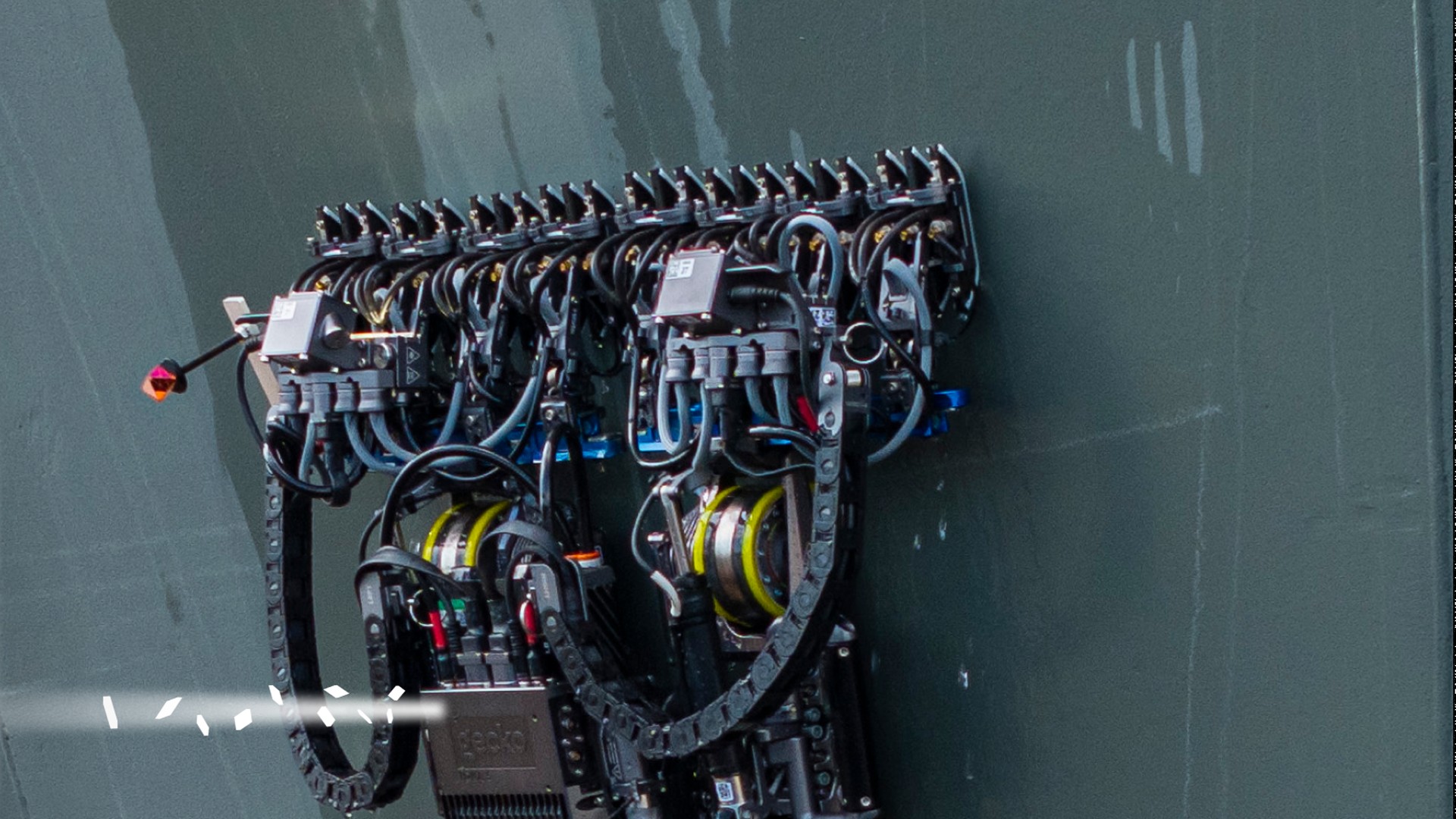
Gecko’s inspection robots are about the size of a rolling suitcase, Fortune reported in 2024. They use magnetic wheels on steel and vacuum adhesion on concrete. The robot climbs the surface, so no one has to hang from a rope.
The same article put roughly 150 robots at customer sites. That is a 2024 figure, so treat it as dated.
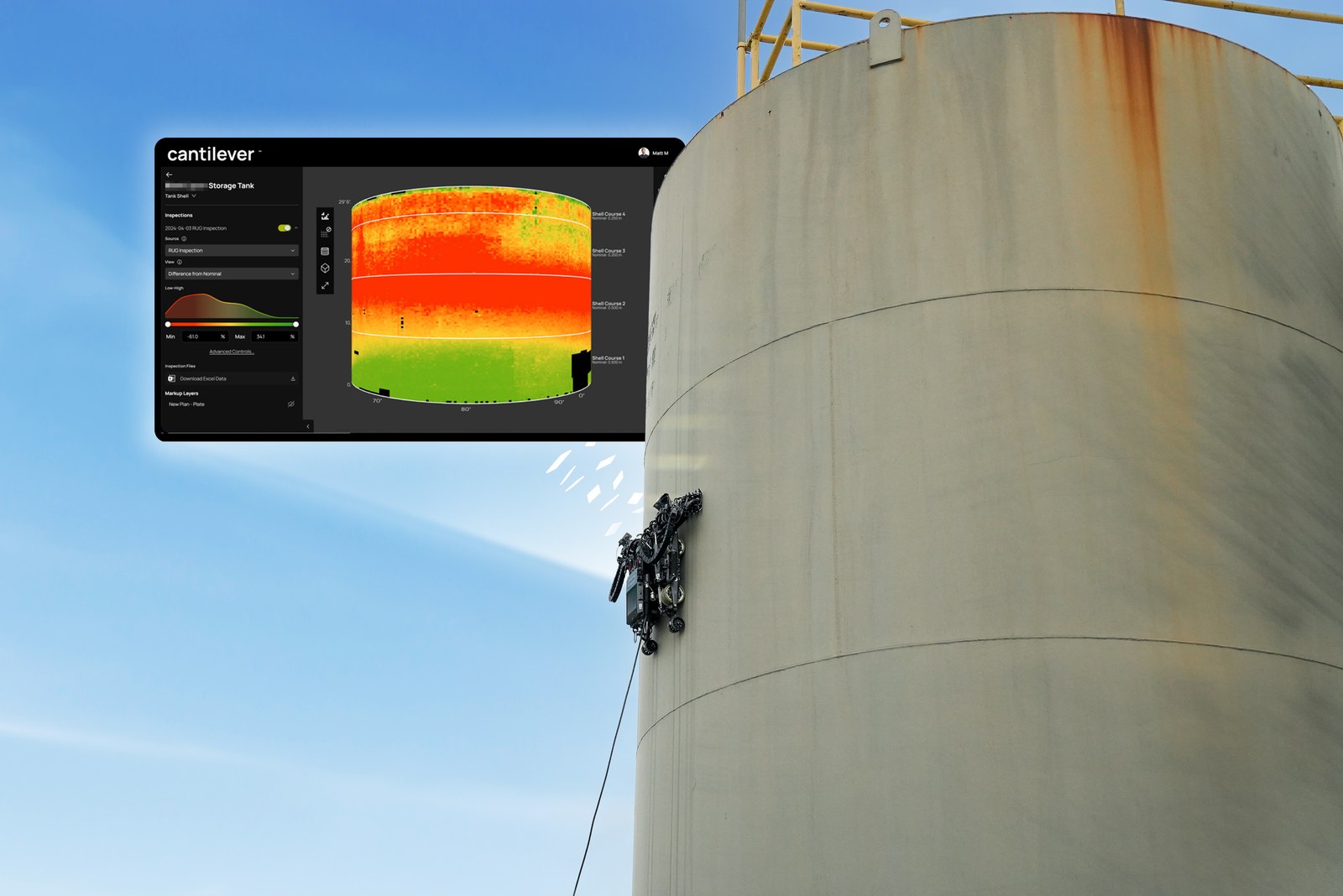
The robot scans a structure, and software uses the readings to create a digital model that shows where metal is thin. Fortune says Gecko’s AI estimates corrosion rates and remaining life and recommends repairs and predictive maintenance. Customers pay for the data and repair plans, but pricing is not public.
In October 2023 Gecko launched Cantilever, the software system that holds the data. In its June 2025 funding release, Loosararian said Cantilever starts from a simple rule: “in the built world, data is guilty until proven innocent.”
The practical application is maintenance planning. Plant operations teams can determine which walls to repair first, and repeat inspections support monitoring of how fast corrosion is eating a wall.
The Gecko Robotics pitch is that the thickness map, not the machine, is the asset. Palantir, which we profiled as a global operating system for defence and industry, follows a similar logic: own the data layer and the rest becomes a way in.
Gecko’s customers are the places where a thin wall means a shutdown
Gecko lists defence, oil and gas, power, pulp and paper, steel and mining on its site, and its inspection services reach beyond ships to power operations and aircraft.
CNBC reported that Cantilever insights can help modernise C-130 aircraft. In February 2025 Gecko announced a deal with NAES, which describes itself as America’s largest independent power operator. The release called it an initial multi-year agreement worth more than $100 million, with an option to grow beyond $250 million.
Gecko’s own data, the release says, indicates its platform can cut reactive maintenance by 80 percent and double an asset’s lifespan. Those are the company’s claims, in a release, and they have not been independently audited.
Gecko also works with Abu Dhabi National Oil Company, where its robots inspect gas facilities and tanks, CNBC reported. In January 2026 Gecko announced a deal with Trident Maritime Systems to raise throughput by at least 40 percent across Trident’s 20 fabrication facilities.
The Navy turned a boiler robot into a warship inspection service
On 17 March 2026 the Navy and the General Services Administration awarded Gecko a five-year IDIQ contract with a $71 million ceiling. The initial award was up to $54 million, covering 18 Pacific Fleet ships, according to Gecko’s release.
An IDIQ ceiling is the most the government can spend, not a promise to spend it. On 20 October 2026 Gecko said the ceiling had been quadrupled to $300 million. The release does not say how many ships that covers.
The expansion is meant to support rapid robotic deployment across the Navy, per Gecko’s October 2026 release.
The pitch is speed. Gecko says its technology finds structural problems up to 50 times faster than manual methods and can save up to $8 million in repairs per ship. One flight-deck evaluation, it says, “eliminated over 3 months of potential maintenance delay days.” These are company figures.
For example, its Komodo robot scans through thick non-skid deck coatings without stripping them. This inspection technique produces a full-deck heatmap of corrosion and thickness, so crews can plan before a ship reaches drydock.
Defence customers pay for readiness, and that explains the price of the round
Gecko raised a $125 million Series D at a $1.25 billion valuation in June 2025, CNBC reported. Cox Enterprises led, with USIT, XN, Founders Fund and Y Combinator continuing. The previous round, $173 million in December 2023, valued Gecko at $633 million. CNBC put total funding at $347 million.
Founders Fund partner Trae Stephens is also co-founder and executive chairman of Anduril. On 8 October 2026 Gecko and Anduril announced a partnership on shipbuilding quality for Anduril’s Arsenal-2 shipyard in Maryland and its California protofactory.
Demmer framed it as capacity: “The challenge facing our nation isn’t a lack of engineering talent or innovation, it’s industrial capacity.” Gecko says its work supports that capacity. For more on that bet, see our edition on how Anduril weaponised speed.
Gecko’s Navy work sits beside a Business Runway thread on warships
The Navy keeps appearing in this series. We covered Saronic’s autonomous warships and Navy contracts, and Gecko serves the other side of the same fleet.
Saronic builds new hulls. Gecko tells the Navy how much life the old ones have left. Both rest on the same physical fact: shipyard capacity is scarce, and the fleet that exists has to be maintained to keep sailing.
There is a pattern here with Fervo’s shale tools turned on geothermal power. Both take a mature industrial method and point it at a new job.
Honest limits: revenue is private, claims are the company’s, and the ceiling is not cash
Gecko is private. Fortune said in 2024 that Gecko declined to disclose revenue or profit, and nothing we opened gives a current figure. The valuation comes from a June 2025 round, and we found no 2026 round.
Almost every performance number here, 50 times faster, $8 million per ship, 80 percent less reactive maintenance, comes from Gecko’s own releases. The Navy’s own measurement of savings is not in what we read.
The $300 million figure is a ceiling. Task orders decide the money the Navy actually spends, and we did not find them published.
Gecko by the numbers
- Founded: May 2013, Pittsburgh, by Jake Loosararian and Orion Correa; Troy Demmer joined in 2016
- Latest round: $125 million Series D, June 2025, at $1.25 billion, led by Cox Enterprises
- Total funding: about $347 million, per CNBC
- Robots deployed: about 150 at customer sites, per Fortune in April 2024
- Navy contract: IDIQ ceiling $71 million in March 2026, raised to $300 million in October 2026
- Navy initial award: up to $54 million for 18 Pacific Fleet ships
- NAES deal: more than $100 million initial, option beyond $250 million
- Revenue: not disclosed
$300 million is the ceiling, and the real product is a map of how thin the steel is.
The hard part is still ahead
Gecko has to turn a contract ceiling into task orders, and task orders into repeat inspections. It also has to prove that its savings hold when the Navy, not Gecko, counts them.
The data business has a second test. Cantilever’s value grows with every inspection, but only if customers keep paying for repeat inspection. If a one-off inspection is enough, the model looks more like a services firm than a software company.
Founder lessons from Gecko Robotics
A student project with a paying customer is a market test
The first robot was built for a real power plant with a real boiler. Gecko did not guess at demand. It started where the need was already stated.
Sell the measurement, not the machine
Robots can be copied. A dated, repeatable map of an asset is harder to replace. Ask which output your customer would still pay for if your hardware changed.
Own the number nobody else has
Corrosion data was sparse because collecting it was dangerous. Gecko turned that danger into a dataset. Look for the measurement your industry avoids taking.
Let a defence contract fund the unglamorous work
The Navy rewards readiness, and readiness depends on inspection. Boring maintenance, paid for by a patient buyer, can carry a company through a long build.
Final word
Gecko Robotics proves that a hard-tech company can be a data company without leaving the physical world. Its robots exist to collect something no one else holds: a complete, current measurement of metal.
What is unproven is the size of the business behind the headline. Watch three things: task orders under the Navy contract, any revenue disclosure, and whether customers rescan on a schedule. Any country that runs boilers, mines and fuel tanks, Botswana included, has the same blind spot.
Sources
- Gecko Robotics company site
- Gecko Robotics newsroom
- Gecko, “Gecko Robotics Announces $71M Deal to Slash U.S. Navy Maintenance Delays”, 17 March 2026
- Gecko, “Geckos’ IDIQ Expands to $300 Million”, 20 October 2026
- The Robot Report, Gecko earns $300M contract with the US Navy, 20 October 2026
- Gecko, “Gecko Reaches Unicorn Status”, 12 June 2025
- CNBC via NBC Connecticut, Gecko raises $125 million
- Gecko, Series C extension release, 5 December 2023
- Fortune, “How Gecko’s Founder Built a $600 Million Robot Company”, 17 April 2024
- Fortune, Jake Loosararian on AI and data, 28 August 2025
- Navy Times, “US Navy, Gecko Robotics surge AI maintenance contract to $300M”, 20 October 2026
- Gecko and Anduril partnership release, 8 October 2026
- Gecko and NAES release, 27 February 2025
- Gecko and Trident release, 21 January 2026
- Business Runway: Palantir’s edge
- Business Runway: Anduril
- Business Runway: Saronic
- Business Runway: Fervo Energy
- Photo: Gecko Robotics media kit (company image, not an open licence)