The Global Sweat Machine: How Moritz Fürste Standardized Physical Pain

During the peak of the 2020 technology boom, the smart money in fitness was betting on the death of the physical gym.
Investors poured billions of dollars into connected home bikes, virtual training screens, and digital subscription apps. The thesis was simple: physical space was an expensive, slow-scaling liability. Digital scale was the future.
But within three years, that thesis spectacularly imploded.
The connected fitness giants suffered catastrophic valuation collapses as consumers realized a brutal biological truth: humans are social, physical creatures. We do not want to sweat alone in a spare bedroom staring at a tablet. We crave physical presence, real community, and shared competition.
Enter Moritz Fürste and Christian Toetzke, the founders of HYROX.
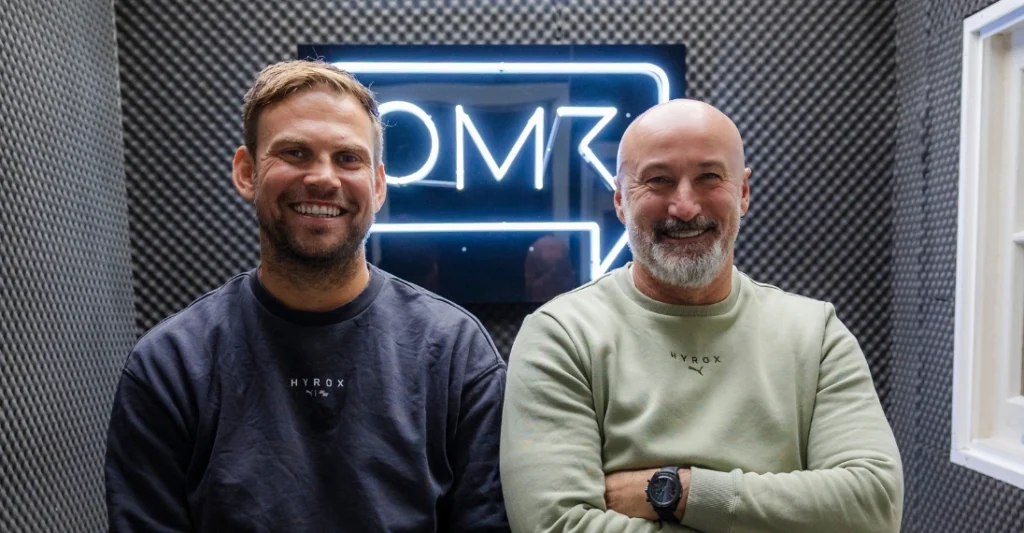
Instead of trying to build another fitness app, Moritz, a double Olympic gold medalist in field hockey, and Christian, a legendary mass-participation sports executive, built a physical sports empire. Today, HYROX has emerged as one of the fastest-growing fitness brands on Earth. Pacing toward over €200 million in revenue, activating a network of over 15,000 partner gyms, and drawing buyout interest from LVMH’s private equity arm, L Catterton, at a €1 billion valuation, HYROX has unlocked the ultimate value innovation in the physical economy.
They proved that the most profitable product in modern fitness is not a digital subscription: it is a standardized, high-volume physical race.
The Problem: The Fitness Identity Crisis
For decades, the global fitness market was divided into three distinct, highly polarized camps.
1. The Loneliness of Running
Traditional mass-participation sports were dominated by running events, marathons, and triathlons. While highly lucrative, these sports are structurally lonely. They require months of solo, monotonous road work, and they fail to engage the upper-body and strength training that 80% of modern gym-goers actually do.
2. The Danger of CrossFit
On the other end of the spectrum sat CrossFit. While CrossFit succeeded in building intense community, it ran into a massive scale ceiling. The movements (such as high-skill Olympic lifting and gymnastic bar work) carry a high barrier to entry and a notorious reputation for injuries. For the average corporate professional who wants to stay fit, CrossFit is simply too risky.
3. The Gym Void
This left the vast majority of the world’s fitness enthusiasts in a commercial void. Millions of people went to big-box gyms, lifted weights, used rowing machines, and ran on treadmills with absolutely no goal in mind. They were training, but they had nothing to train for. They had a routine, but they did not have a sport.
Moritz Fürste and Christian Toetzke realized that this void was the single largest business opportunity in the physical world. They did not need to invent a new exercise. They needed to give the existing fitness routine a standardized, competitive meaning.
The Playbook: Value Innovation over Product Innovation
HYROX’s core breakthrough is a concept known in business model architecture as Value Innovation.
Value innovation occurs when a company does not invent a new product, but instead changes the fundamental meaning and emotional experience of an existing one. HYROX did not invent the treadmill, the rowing machine, or the sandbag. They took exercises that gyms had offered for fifty years and turned them into a standardized, global race.
The blueprint is identical in every city on Earth:
- A 1-kilometer run, followed by 1 functional workout station.
- This exact cycle is repeated 8 times (8 kilometers of running and 8 functional stations).
- The 8 stations are highly standardized: SkiErg, Sled Push, Sled Pull, Burpee Broad Jump, Rowing, Farmers Carry, Sandbag Lunges, and Wall Balls.
The Power of the Standardized Template
By standardizing every single event down to the exact decibel of the music, the color of the turf, and the weight of the sleds, HYROX turned physical events into a repeatable, high-margin software deployment.
An athlete competing in London can compare their exact finishing time with an athlete in Chicago, Tokyo, or Sydney. By creating a global leaderboard, HYROX turned a local workout into an internationally recognized competitive sport.
This is the exact same operational philosophy we saw with Platō Coffee standardizing physical retail footprints to scale over 130 locations. Both companies realized that if you want to scale a physical business, you must eliminate custom variables and design a repeatable, predictable template.
Bypassing Customer Acquisition Cost
The traditional event business model is highly risky because it relies on massive, continuous marketing spend to acquire ticket buyers for single events. HYROX bypassed this bottleneck by building a self-sustaining ecosystem.
Instead of trying to market directly to millions of individual fitness enthusiasts, Moritz and Christian went straight to the source: the local gym owner.
HYROX launched an affiliate partner network. For a recurring fee, local gyms can license the HYROX name, access official training programs, and market themselves as official “HYROX Training Clubs.” This network has grown to over 15,000 gyms globally.
The brilliance of this B2B2C model is that gym owners do the marketing for HYROX. They pitch their own members on signing up for local race weekends. As a result, HYROX enjoys an event customer acquisition cost that is practically zero.
It is a beautiful, self-reinforcing flywheel: the gyms train the athletes, the athletes pay HYROX to compete in the race, and the race drives more members back into the affiliate gyms.
Founder Lessons: Standardizing the Sweat
1. Design for the Average, Not the Elite
CrossFit built an empire on the “Fittest on Earth” mentality, which inherently alienated the masses. HYROX designed their race to have a 100% completion rate. By removing high-skill movements and focusing entirely on natural human locomotion (running, pushing, carrying, throwing), they built a sport that a 22-year-old elite athlete and a 65-year-old grandmother can finish on the same track. If you want to build a mass-participation giant, you must lower the technical barrier while maintaining the physical challenge.
2. Turn the Delivery into a Factory
Traditional event planning is a logistical nightmare of custom setups, local contractors, and unpredictable execution. Christian Toetzke utilized his years of sports management experience to turn HYROX events into a highly optimized assembly line.
They designed a proprietary event-in-a-box model where massive convention centers are mapped onto a precise digital grid. This mirrors Hadrian’s approach of using software-defined operations to rebuild aerospace manufacturing. HYROX treats the event floor like a factory floor, ensuring they can set up, run 10,000 competitors through a race in a single weekend, and tear down with absolute efficiency.
3. Capture the Community Moat
In the physical world, your strongest defense is not intellectual property: it is social gravity. By introducing Doubles and Relay divisions, HYROX turned a grueling physical trial into a team sport. Over 50% of participants sign up with a partner. This social pressure dramatically increases retention, drives viral social media content, and creates an emotional network effect that copycat events simply cannot replicate.
Final Word
The success of HYROX is a warning to founders who believe the future of business belongs entirely to digital code.
Moritz Fürste and Christian Toetzke proved that some of the most lucrative, defensible business opportunities exist in the oldest, heaviest domains of the physical world. By applying the standardization of modern manufacturing to the raw chaos of human effort, they didn’t just build a highly profitable event brand. They built the world’s first global, standardized sports stadium for the everyday athlete.

Tumisang Bogwasi
Tumisang Bogwasi is an award-winning entrepreneur and strategist sharing insights on business growth, leadership, and innovation.