
On Black Friday 2011, Patagonia bought a full page in the New York Times to tell shoppers to stop buying its products. By the account of Casey Sheahan, its chief executive at the time, the page cost 57,000 dollars and brought in 40 to 50 million dollars of free publicity.
This is not a story about conscience. It is a story about a company that found the cheapest available route to customer trust and then built its ownership structure so competitors could not follow.
When Every Brand Makes the Same Promise, the Promise Stops Working
Look at any mature consumer category and you will find a wall of companies making identical claims. Better quality. Better materials. Better service. The customer has heard all of it before, from every competitor, in the same tone of voice, and has learned to discount every word of it.
This is the commoditisation trap. When every brand makes the same promise, the promise itself stops carrying information.
Marketing spend keeps climbing while its effect keeps falling, and the category slides toward a price war that nobody profits from. This is the same dynamic that pushed the airline sector into the ground and made Ryanair’s unbundling strategy the only rational escape route.
The standard reaction is to increase the volume. Bigger campaign, more channels, louder claims. That reaction is what makes the trap a trap, because your competitor can match every unit of spend you add.
A claim your competitor can copy is not positioning. It is noise with an invoice attached.
Patagonia’s Don’t Buy This Jacket Ad Sold Less on Purpose in the New York Times
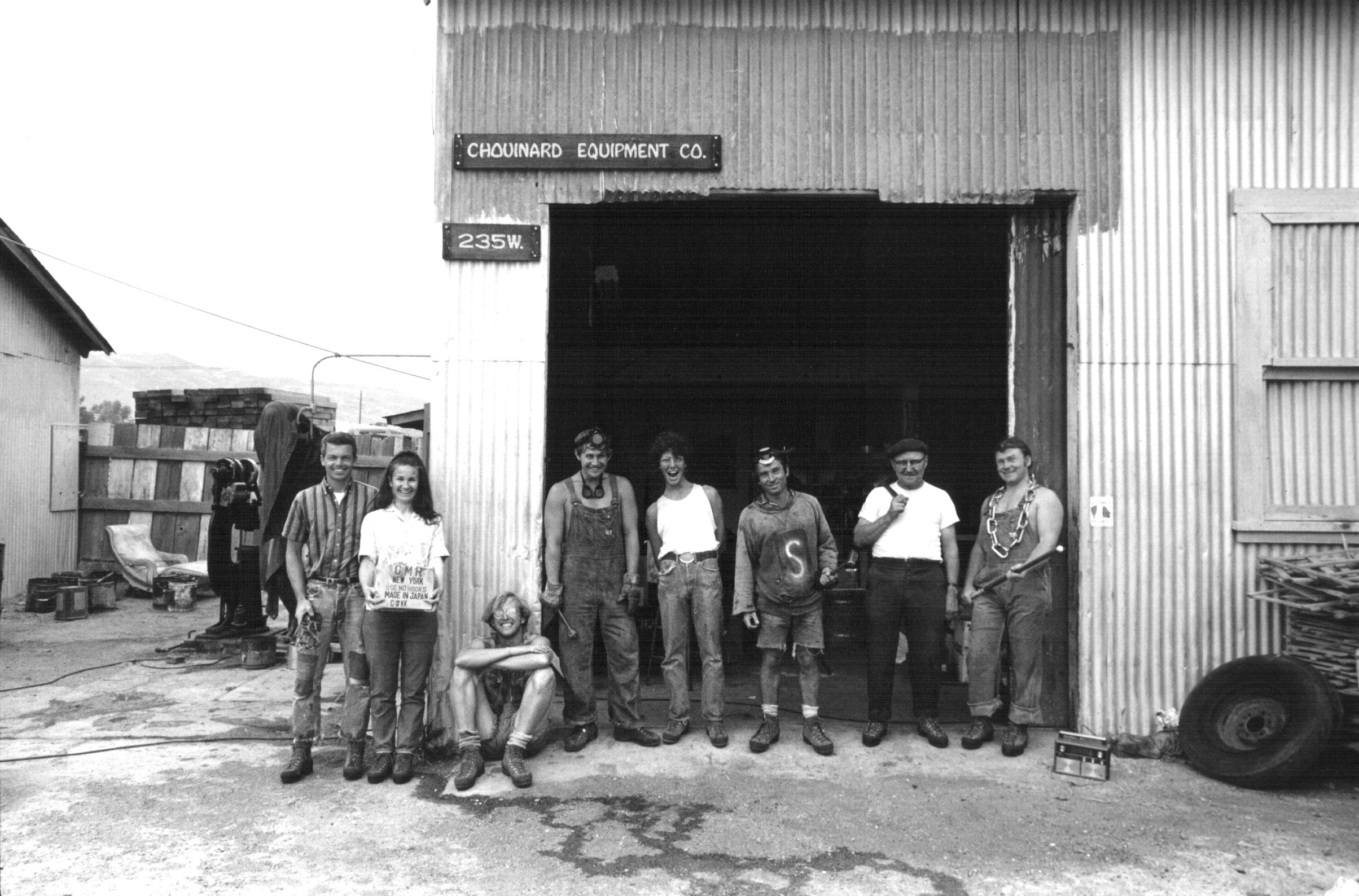
Yvon Chouinard started with a used coal-fired forge he bought in 1957 to make his own climbing hardware. In 1965 he went into partnership with Tom Frost as Chouinard Equipment, and by 1970 it was the largest supplier of climbing hardware in the United States. The clothing line that became Patagonia grew out of that business in the early 1970s.
The company built its reputation on gear that outlasted the people who bought it, which creates an obvious commercial problem: a product that never wears out is a product you only sell once.
Rather than quietly engineer that durability away, Patagonia made it the entire argument.
On 25 November 2011, the company ran a full page in the New York Times carrying a photograph of its R2 fleece under the headline “Don’t Buy This Jacket.” It was a rare advertisement aimed at consumerism itself.
The copy laid out the environmental footprint of the jacket, one of its best sellers: 135 litres of water, nearly 20 pounds of carbon dioxide, and two thirds of its own weight in waste.
Then it asked readers not to buy it unless they needed it.
The idea did not come from an agency. It came from inside the company: Rick Ridgeway, a longtime Patagonia executive, wrote the tagline with Vincent Stanley, drawing on a 1990 Utne Reader advertisement by Doug Tompkins titled “A Plea for Responsible Consumption.”
The board was not unanimous. Kris McDivitt Tompkins, a director and former chief executive, worried it would read as hypocritical marketing. The board approved it only on a second pitch.
The advertisement was the sharpest expression of the Common Threads Initiative, the company’s pledge to reduce, repair, reuse and recycle. Customers who sold their used Patagonia gear on eBay and took the pledge had it co-listed on patagonia.com.
Worn Wear Sells Patagonia’s Own Used Clothing Back to Customers
That thinking later became Worn Wear, which sells Patagonia’s own used garments back to customers and repairs the ones they already own.
Patagonia built a business unit that competes directly with its own new product line, then promoted that business unit on the most expensive retail day of the year.
The Advertisement Was a Signal Competitors Could Not Afford to Fake
The mechanism is not sentiment. It is proof.
Any competitor can run an advertisement claiming its products last a long time. Almost no competitor can run an advertisement telling customers not to buy, because almost no competitor has a product durable enough, or margins healthy enough, to survive customers taking that advice seriously.
The advertisement was a signal that was expensive to fake. It made the quality claim and proved it in the same gesture. Customers who had spent years discounting quality claims from everyone had no framework for discounting this one.
Sheahan put the return plainly: “For that $57,000 ad in The New York Times, we got $40 million to $50 million of free publicity.” That is his estimate, not an audited figure, but even a fraction of it is a return no media plan delivers.
Yvon Chouinard Gave Patagonia to a Trust, and the Promise Became Permanent
The advertisement gets the attention. The advertisement is also the visible edge of a much harder decision.
In September 2022, Chouinard transferred ownership of the company, then valued at around 3 billion dollars. Two percent of the shares, carrying all voting stock, went to the Patagonia Purpose Trust.
The remaining 98 percent, all non-voting, went to the Holdfast Collective, a nonprofit directing company profits toward the fight against climate change. At the time the company said it expected to send some 100 million dollars a year, depending on the health of the business. The family paid about 17.5 million dollars in tax on the gift and took no tax benefit.
The money has arrived more slowly than that headline. Tax filings reported by David Gelles show Patagonia sent about 63 million dollars to the Holdfast trust in 2024, and the trusts gave away roughly 40.7 million dollars that year.
Critics also point out that the structure avoided an estimated 700 million dollars in capital gains tax compared with a sale, by Bloomberg’s estimate, and that Holdfast, as a 501(c)(4), can spend on politics without limit. A sustainability story does not cancel the tax questions.
Neither point undoes the mechanism. The family gave the company away and cannot take it back, and voting control now sits in a trust whose job is to hold Patagonia to its purpose. That is the part that matters for positioning.
That move converted a marketing position into a governance fact. A competitor can copy an advertisement in a quarter. Copying an ownership structure that permanently forfeits the exit is a different proposition, and it is why the position has held for over a decade.
This is the same logic that lets Basecamp refuse venture capital and operate calmly while funded competitors run layoffs. In both cases the founders removed an option from their own future in order to make a promise the market could believe.
Positioning that lives in the marketing budget is rented. Positioning that lives in the ownership structure is owned.
That distinction is where The Five Ways a Moat Breaks ended: nine companies lost positions they believed they owned. Patagonia is the reverse case, a company that took an advantage it was renting from its advertising and moved it into its legal structure.
Build a Signal Your Competitors Cannot Afford to Copy
The lesson does not require a climbing brand, an environmental mission, or a founder willing to give away a fortune. It requires one honest answer to one question: what can you say that your competitors physically cannot?
1. Find the claim only you can survive
List the promises your category makes. Cross out every one a competitor could make tomorrow. What survives is usually uncomfortable, usually costs you something real, and is the only sentence worth building a campaign on.
2. Make the proof structural, not verbal
Patagonia backed the claim with a repair operation, a resale channel and an unconditional guarantee. Build the operational fact first. The campaign announces a decision you already made. It does not substitute for making it.
3. Price the short-term cost and accept it
Telling customers to buy less costs revenue in the quarter. Refusing funding costs growth speed. If the position costs you nothing, the market correctly reads it as marketing and discounts it accordingly. Model that cost with the same discipline that separates a business from an A+ technology running a C- business model, then decide whether you can carry it.
4. Remove your own escape hatch
The trust structure works because it is irreversible. Whatever your version is, a guarantee you cannot quietly withdraw, a published pricing promise, a market you formally exit, its credibility comes from the fact that reversing it would be visibly expensive.
5. Hold the line past the first bad quarter
An expensive signal only pays once the market believes it is permanent, and belief takes years. Companies that abandon the position after two soft quarters pay the full cost and collect none of the return.
Patagonia did not get lucky with a brave advertisement. It found the cheapest available route to a position competitors could not reach, and paid for it in a currency they did not have. The environmental commitment is real, and it is also the mechanism. Both things are true at once.
Take only the warm version of this and you will write a values page nobody reads.
Take the structural version and you have a harder question for your next strategy session: which promise are you willing to make irreversible, and what does it cost you to mean it?
If that promise costs you nothing, your market has already discounted it.
Sources
- Patagonia, “Don’t Buy This Jacket” advertisement, The New York Times, 25 November 2011. Ad copy, R2 Jacket figures and the Common Threads pledge.
- David Gelles, “The Secret History of Don’t Buy This Jacket”. Origin of the campaign, the Doug Tompkins precedent, board resistance and Casey Sheahan’s quote on ad cost against earned coverage.
- Patagonia, Company history. The 1957 forge, the 1965 Chouinard Equipment partnership with Tom Frost and its position by 1970.
- The New York Times, “Billionaire No More: Patagonia Founder Gives Away the Company”, 14 September 2022. Valuation, ownership split, the 100 million dollar expectation and the 17.5 million dollar tax bill.
- Patagonia, Ownership. Holdfast Collective and Patagonia Purpose Trust holdings.
- David Gelles, newsletter post on Patagonia’s 2024 tax filings, 13 January 2026. Payments to the Holdfast trust and grants made.
- Fortune, report on the tax treatment of the transfer, 16 September 2022, citing Bloomberg’s estimate of capital gains tax avoided.
- Featured photo: Patrick Hendry, CC0, via Wikimedia Commons, a climber in a Patagonia down jacket.
- Inline photo: Chouinard Equipment Co., 1969, by Tom Frost, CC BY 3.0, via Wikimedia Commons.