On 14 March 2006, Amazon announced a storage service that cost 15 cents per gigabyte per month, with no minimum fee.
On 29 October 2026, Amazon reported that Amazon Web Services had earned 17.8 billion dollars in operating income in a single quarter, on sales of 46.0 billion dollars. That is about 63 percent of the 28.1 billion dollars the whole company earned.
The popular explanation is that a bookseller rented out its spare servers. The people who wrote the proposal say that is false.
The Engineer Who Co-Wrote the Proposal Calls the Spare-Capacity Story False
Benjamin Black was credited with co-authoring the original AWS proposal at Amazon, with Chris Pinkham. In 2015 he told Network World that the spare-capacity story was “totally false” and that every part of AWS had been built for AWS from the start.
Black said the 2003 idea was to decouple applications from infrastructure so Amazon could scale, and that it might be sold as a service. Bezos approved it, by Black’s account.
Pinkham then led the team that built EC2, the rental computers. He wanted to move back to South Africa, so the team worked from Cape Town.
The Real Trigger Was a Retailer That Could Not Build a Database Fast Enough
Andy Jassy, who later ran AWS and now runs Amazon, told the origin story at Harvard Business School in 2013, as GeekWire retells it.
He had been asked why software projects at Amazon took so long. Engineers were spending months building storage, database and compute from scratch for each project.

In a meeting that summer, someone observed that Amazon was good at this, and that other companies probably had the same problem.
That is a bottleneck, not a surplus. Amazon did not have idle machines to monetise. It had a slow, repeated internal chore that every company building software also had.
Accounts differ on the details. GeekWire reports that former employees say Amazon tidied the narrative over the years, and that Jassy disputed parts of journalist Brad Stone’s telling, including how much EC2 came from Jassy’s process.
GeekWire says Amazon could not unearth Jassy’s original September 2003 memo.
Amazon Sold the Smallest Parts and Billed by the Increment
Amazon’s launch announcement called S3 “a simple storage service”. It was the first time developers could pay for exactly what they used, in tiny increments, with no commitment, as GeekWire describes it.
Compute followed in August 2006. EC2 rented a computer at 10 cents an hour, according to GeekWire’s account of the early pitch.
The design rule was to break every capability into its most basic building block. Each piece would stand alone and be billed by use.
GeekWire frames that as a rebuke to licensing models such as Oracle’s, where customers paid whether they used the software or not.
Early users spent very little. A New York Times engineer used a personal credit card to run character recognition on the paper’s scanned archives over a weekend, at a cost of a couple of hundred dollars.
The Profit Engine Stayed Hidden for Nine Years
For nearly a decade Amazon did not report AWS separately. On 23 April 2015 it did, for the first time.
AWS had 1.57 billion dollars in sales for the quarter, up 49 percent, and 265 million dollars in operating income. Jeff Bezos called it a five billion dollar business.
An early AWS product leader told GeekWire he had assumed Amazon was losing billions on it. Per GeekWire, the margin was around 17 percent, against 2 to 3 percent in retail, and Amazon’s stock rose 15 percent.
The lesson for a founder is not the margin. It is that nobody outside could see the business until it was reported on its own line.
In One Quarter AWS Earned 17.8 Billion Dollars on 46.0 Billion in Sales
In the quarter ended 30 September 2026, AWS sales rose 39 percent to 46.0 billion dollars. Operating income was 17.8 billion dollars, against 11.4 billion a year earlier.
That is a margin of 38.7 percent, my calculation from Amazon’s figures, up from 34.6 percent. Amazon said it was AWS’s fastest growth in nearly five years. Over the last twelve months, AWS sales were 161.4 billion dollars.
Jassy said that Amazon’s AWS investment “is working”, and projected growth of over 40 percent in both 2027 and 2028. That is his projection, not a result.
Its Lead in the Market Is Shrinking While the Market Booms
Synergy Research Group estimates that cloud infrastructure services earned 167.7 billion dollars in the third quarter of 2026, up 55 percent. Amazon held 26 percent of it, Microsoft 19 percent and Google 16 percent.
A year earlier, Synergy had Amazon at 29 percent, Microsoft at 20 and Google at 13. Amazon was at 32 percent in 2021, according to TechTarget’s reading of Synergy.
Synergy says Microsoft and Google are growing substantially faster, and that neoclouds such as CoreWeave are eroding the share of established providers.
AWS is growing quickly. It is just growing at a slower rate than the market it created.
The AI Bet Is Being Paid for Faster Than It Is Being Repaid
Amazon expects about 220 billion dollars of cash capital expenditure in 2026, company-wide. Over the last twelve months its free cash flow was an outflow of 42.4 billion dollars, which Amazon attributes mainly to a 94.8 billion dollar rise in spending on property and equipment.
The demand is contracted. In February 2026, OpenAI agreed to expand its 38 billion dollar AWS agreement by 100 billion dollars over eight years, and Amazon agreed to invest up to 50 billion dollars in OpenAI.
In April, Anthropic committed more than 100 billion dollars over ten years to AWS technology, for up to five gigawatts of capacity.
Here is the catch. Some of the largest customers are AI labs that Amazon also finances, and whose own economics are the subject of my piece on an A+ technology with a C- business model. A commitment is only as good as the buyer.
Capital intensity is also a moat. TSMC’s spending shows the same bargain: scale protects you, and the bill comes first.
Five Checks Before You Sell Your Own Bottleneck
You do not need a data centre. If you run a side project, a studio or a small software team, these five checks come from how AWS began.
1. Start from what slows you down, not what sits idle
Amazon’s trigger was projects stalling for months on storage, databases and compute. Write down the one chore you repeat on every job. If outsiders pay for your spare time, you have a hobby. If they pay to skip your chore, you may have a product.
2. Cut it into the smallest piece someone could buy alone
AWS sold storage separately from compute. A customer did not need your whole stack, only the part that hurt. List what you do for yourself, then price the smallest piece.
3. Bill by use, so the first customer risks almost nothing
S3 had no minimum fee. A buyer who can start with a few dollars will try you before they trust you. Offer a way to start for less than the cost of a meeting.
4. Give the side business its own number
AWS stayed invisible for nine years, and an early product leader assumed it was losing billions. Track its revenue and margin separately from day one. It is the same lesson as the number nobody outside Wonder can see: the story hangs on one figure.
5. Watch your share, not just your growth
AWS grew 39 percent and still lost share, from 29 to 26 percent in a year. Revenue growth can hide a weakening position. Decide which share figure matters to you and check it every quarter.
A Bottleneck Sold Well Out-Earns the Business It Came From
Amazon did not find spare machines. It found a repeated problem inside its own company and sold the solution in small pieces to anyone who had the same problem.
That created the unit that now earns most of Amazon’s profit. Its position is under pressure, but that is an ordinary way for an advantage to fade, and it has not broken.
Before you plan your next side project, ask which problem you solve for yourself every week, and who else pays to skip it.
If nobody does, you are selling what you happen to have.
Sources
- Amazon, Amazon.com Announces Third Quarter Results, 29 October 2026. AWS sales, operating income, growth, Jassy’s remarks, capex guidance, free cash flow and the 28.1 billion dollar total.
- U.S. Securities and Exchange Commission, Amazon 8-K, Exhibit 99.1, 29 October 2026. Prior-year AWS figures and trailing twelve-month sales.
- Synergy Research Group, Cloud Market Growth Rate Surges to Well Over 50% per Year; Q3 Revenues Reach $168 Billion, 29 October 2026. Market size and 26, 19 and 16 percent shares.
- TechTarget, The big three grab two-thirds of $107B cloud market in Q3, 20 November 2025. Synergy’s Q3 2025 shares and the 2021 comparison.
- GeekWire, AWS at 20: Inside the rise of Amazon’s cloud empire, 22 March 2026. Origin accounts, the 2015 breakout, the contested history and the OpenAI and Anthropic background.
- Network World, The myth about how Amazon’s Web service started just won’t die, 2 March 2015. Benjamin Black on the proposal and the spare-capacity myth.
- TechCrunch, How AWS came to be, 2 July 2016. Jassy’s account of the internal bottleneck.
- Amazon, S3 launch press release, 14 March 2006. The 15 cent price and no minimum fee.
- Fortune, Amazon Web Services is a $5 billion business, 23 April 2015. First AWS sales and operating income.
- OpenAI and Amazon, Strategic partnership announcement, 27 February 2026. The 38 and 100 billion dollar agreements and the 50 billion dollar investment.
- Anthropic, Anthropic and Amazon expand collaboration for up to 5 gigawatts of new compute, 20 April 2026. The 100 billion dollar, ten-year commitment.
- Inline photo: Werner Vogels at the TNW Conference 2011, by Julia de Boer / The Next Web, CC BY 2.0, via Wikimedia Commons.jpg), cropped.
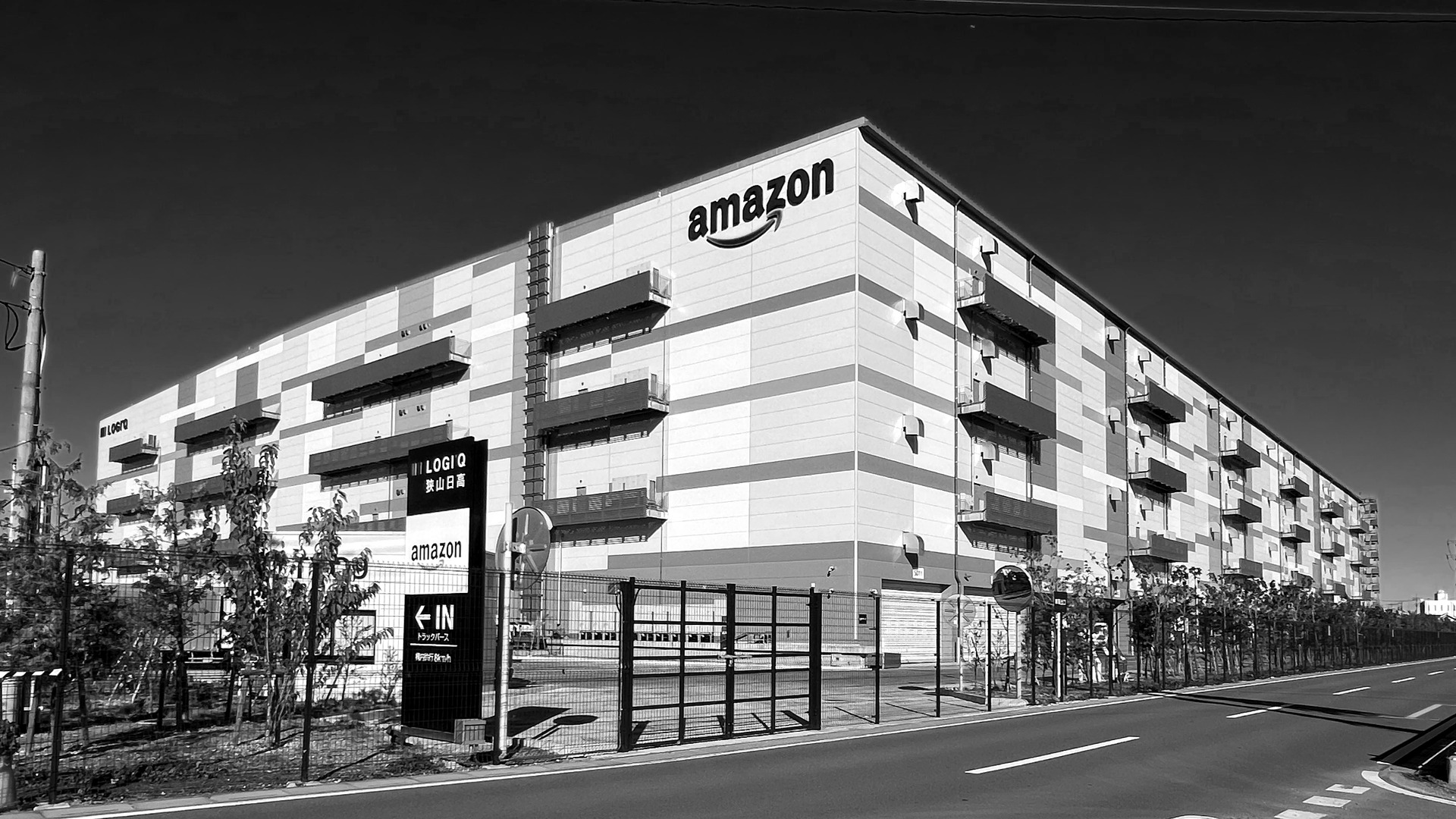
- Featured photo: Amazon fulfilment centre, Sayama, Japan, 19 November 2023, by Asanagi, CC0, via Wikimedia Commons, cropped and converted to black and white. A stand-in for Amazon’s retail side, not an AWS site.
- Video: AWS Events, AWS re:Invent 2025, Keynote with Dr. Werner Vogels, YouTube.